


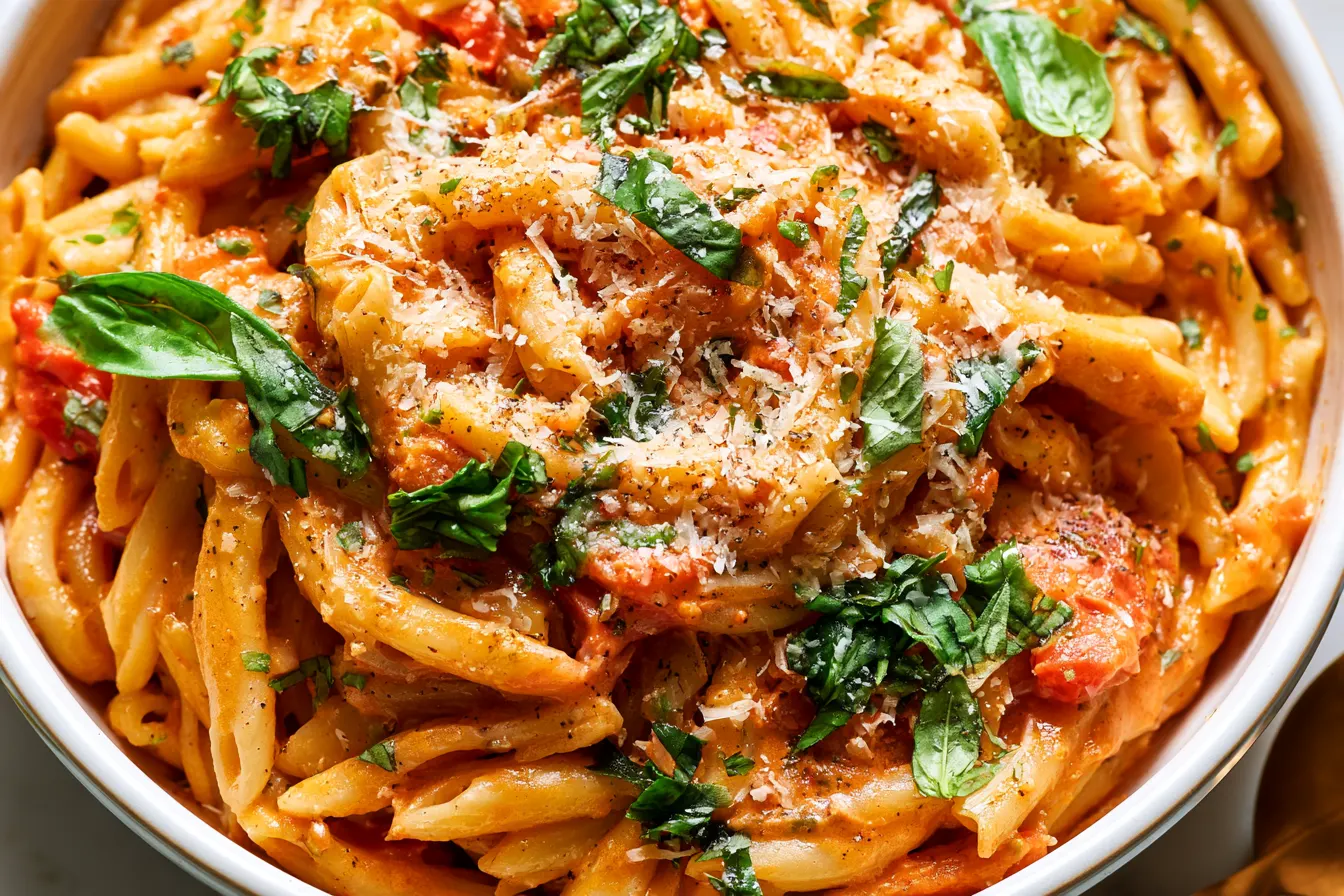
This one pan creamy tomato pasta is the weeknight miracle I reach for when the fridge is low and patience is thinner than usual.
I first threw this together on a rainy Tuesday when I had one wilted bunch of spinach and a ball of mozzarella begging to be used. The dish smelled like comfort within ten minutes — garlic, bright tomatoes, and a hint of basil — and it felt like cheating that the whole thing cooked in a single skillet.
It’s picky-eater approved, easy to scale, and hits that creamy-tomato balance without heavy cream taking over. If you’re searching for a fast, satisfying one-pot pasta that tastes like you spent twice as long on it, this is your recipe.

What you’ll need (Ingredients)

Below I split ingredients into the pasta base, the sauce essentials, and optional add-ins so you can swap depending on what’s in your pantry.
Pasta & cooking liquid
- 12 oz (340 g) dried pasta (penne, rigatoni, or spaghetti)
- 3 1/2 cups (840 ml) low-sodium chicken or vegetable broth
- 1/2 cup (120 ml) water — more if needed
Sauce essentials
- 2 tbsp olive oil
- 1 medium onion, finely chopped (about 1 cup)
- 3 cloves garlic, thinly sliced or minced
- 1 can (14 oz / 400 g) crushed tomatoes
- 1/2 cup (120 ml) heavy cream or half-and-half
- 1/2 cup freshly grated Parmesan cheese
- Salt and black pepper, to taste
Add-ins & finishing
- 4 cups baby spinach (packed)
- 6–8 oz (170–225 g) fresh mozzarella, torn or diced
- 1/4 tsp red pepper flakes (optional)
- Fresh basil leaves, for garnish
- 1 tbsp butter (optional, for gloss)
Why this version works
This recipe leans on two smart ideas: cooking the pasta in the sauce liquid so it absorbs flavor, and finishing with cheese and cream off the heat so the texture stays silky rather than broken. The crushed tomatoes give body; a touch of cream warms the mouthfeel without making the sauce cloying.
Cooking everything in one pan keeps cleanup minimal and lets the starch from the pasta thicken the sauce naturally. You’ll get a glossy, clinging sauce that coats each piece of pasta beautifully.
Step-by-step: One Pan Creamy Tomato Pasta

1. Sauté aromatics (5 minutes)
Heat a large, heavy skillet or sauté pan over medium heat. Add the olive oil, then the chopped onion. Cook, stirring occasionally, until the onion is translucent and smells sweet — about 4 minutes.
Add the garlic and red pepper flakes (if using). Stir for 30–45 seconds until the garlic is fragrant but not browned.
2. Build the tomato base (2 minutes)
Pour in the crushed tomatoes and give everything a good scrape to loosen any browned bits from the pan. Let the mixture come to a gentle simmer so the acidic edge of the tomatoes softens slightly — about 1–2 minutes.
3. Add pasta and liquid, simmer (12–15 minutes)
Stir in the dried pasta, broth, and water so the pasta is mostly submerged. Increase heat just enough to bring the pan to a steady simmer. Partially cover the pan to control splatter and simmer, stirring every 3–4 minutes so the pasta cooks evenly and doesn’t stick.
Reduce the heat slightly if the liquid evaporates too fast — you want a rolling simmer, not a hard boil. Cooking times will depend on pasta shape: thin spaghetti takes around 8–10 minutes; penne or rigatoni may need 11–13 minutes. Cook to al dente.
Tip: If the sauce looks too thin near the end, remove the lid and let it bubble for a minute; the surface evaporation will thicken it quickly. If it’s too thick, add a splash more broth or water.
4. Fold in spinach, cream, and cheese (2–3 minutes)
Once the pasta is al dente and most liquid is absorbed, reduce the heat to low. Stir in the baby spinach a handful at a time — it will wilt down fast.
Add the heavy cream (or half-and-half) and Parmesan. Stir until the cheese melts and the sauce turns silky. Taste and season with salt and pepper. If you used low-sodium broth, you’ll likely need a generous pinch of salt.
5. Finish with mozzarella and rest (2 minutes)
Turn off the heat and scatter the torn mozzarella over the pasta. Cover the pan for 1–2 minutes so the cheese softens without fully melting into a gluey mess.
Sneak in the butter here if you want extra gloss, then sprinkle torn basil and a crack of black pepper before serving.
Common mistakes and how to avoid them
People often overcook the pasta thinking the sauce will compensate. Keep an eye on texture — aim for firm to the bite. The pasta will continue to soften slightly while you finish the sauce.
Another misstep is adding all the cream too early. Adding dairy over high heat can cause separation; warm the cream gently at the end for the smoothest finish.
Ingredient spotlight & substitutions
Crushed tomatoes: They lend a rustic texture and body. San Marzano-style canned tomatoes are great, but any good-quality crushed tomato works.
Mozzarella vs. burrata: Fresh mozzarella melts into creamy pockets. Swap for burrata for an indulgent finish — tear it over individual servings instead of stirring it in.
Make it lighter: Use half-and-half or replace some cream with Greek yogurt stirred in off the heat for tang and protein.
Make-ahead, storage & reheating
Store leftovers in an airtight container for up to 3 days. The sauce will thicken as the pasta absorbs more liquid.
To reheat: loosen with a splash of broth or water and warm gently on the stovetop over low heat, stirring frequently. Use the microwave in short bursts, stirring between intervals. Add a drizzle of olive oil or a small knob of butter to revive shine.
Variations & flavor twists
- Add protein: brown Italian sausage or pan-seared chicken pieces fold in well. Thin slices of prosciutto work too.
- Veg-forward: toss in roasted mushrooms or sun-dried tomatoes for extra umami.
- Herby lift: fold in chopped parsley or a spoonful of pesto just before serving.
Serving suggestions
This pasta pairs wonderfully with a crisp green salad and crusty bread to mop up every last bit of sauce. For wine, try a light-bodied Chianti or a crisp Pinot Grigio to cut the creaminess.
FAQ
Can I use dried basil or Italian seasoning instead of fresh basil?
Yes — if fresh basil isn’t available, add 1 tsp dried basil or 1 1/2 tsp Italian seasoning during the simmer stage. Add fresh herbs at the end if you have them for brightness.
What pasta shapes work best for one-pan cooking?
Short, tubular shapes like penne, rigatoni, and fusilli are ideal because they trap sauce. Spaghetti and linguine will work but need more careful stirring to prevent clumping.
Can I make this dairy-free or vegan?
Absolutely. Use a plant-based cream (oat or cashew cream) and vegan Parmesan. Finish with torn almond-based mozzarella or simply omit the mozzarella and add extra nutritional yeast for savory depth.
How do I prevent the sauce from burning on the bottom?
Use a heavy-bottomed pan and maintain a moderate simmer rather than high heat. Stir every few minutes and reduce the heat if you notice sticking. Adding enough liquid at the start helps too.
Is it okay to use fresh tomatoes instead of canned?
Yes, but fresh tomatoes need more time to break down. Use about 2 cups of chopped ripe tomatoes and simmer a little longer until they soften into a saucy consistency, or blitz them in a blender first.
Why you’ll make this again
It’s forgiving, fast, and endlessly adaptable. In less than 30 minutes you get dinner that feels like you fussed over it — creamy, tangy, and studded with melty mozzarella. It’s the kind of recipe that becomes a weeknight favorite because it satisfies everyone at the table.

One Pan Creamy Tomato Pasta with Spinach and Mozzarella
A quick, creamy tomato pasta cooked in one pan with spinach and melty mozzarella — ready in under 30 minutes and perfect for busy weeknights.
🛒 Ingredients
👩🍳 Instructions
Substitutions: use half-and-half or a plant-based cream for a lighter or vegan option; swap mozzarella for burrata for a special occasion. Storage: refrigerate leftovers up to 3 days. Reheat with a splash of broth on low heat to loosen the sauce.