


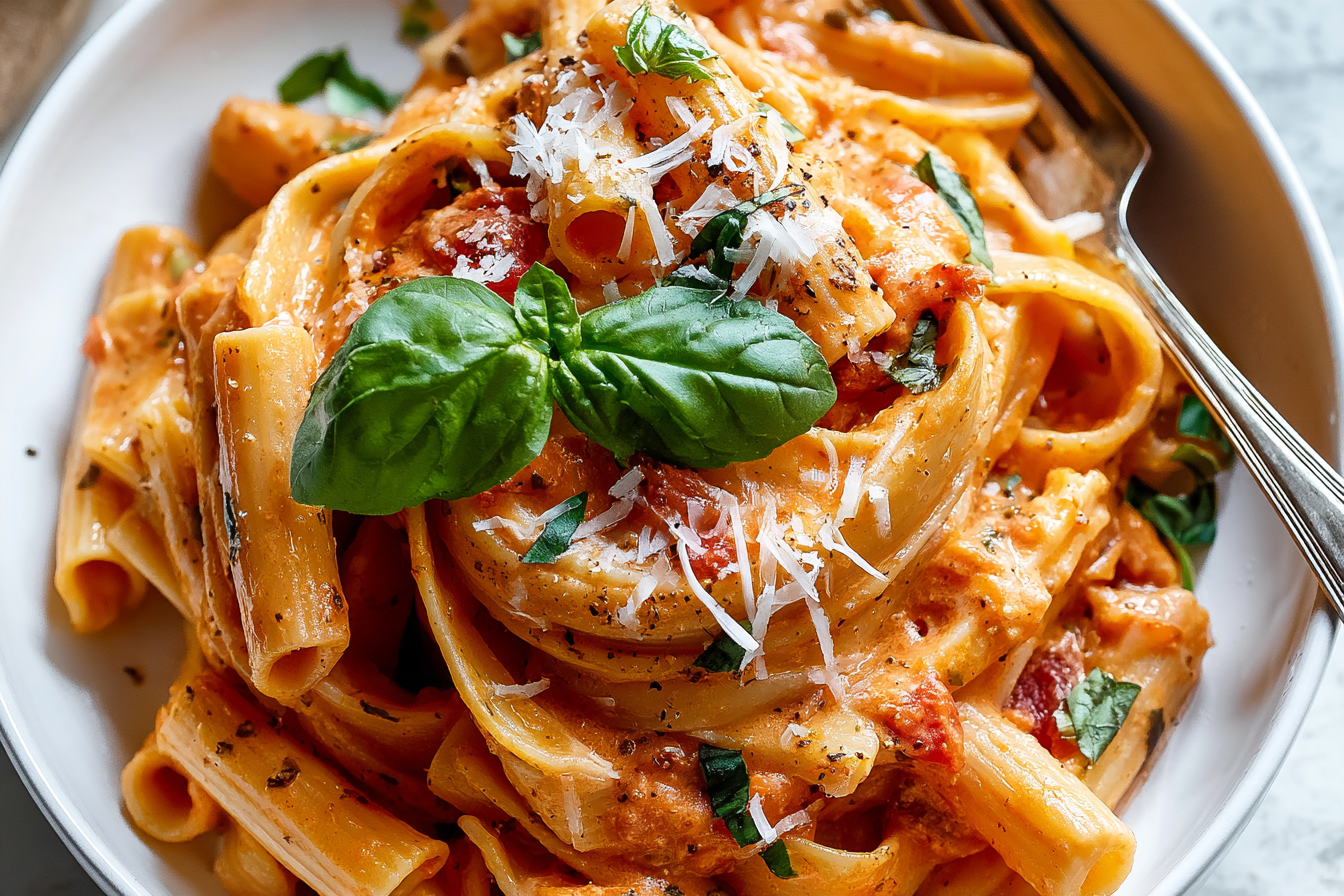
Creamy Tomato Pasta is my go-to when the fridge looks sad and I still want something comforting in under 30 minutes.
- What this recipe promises
- Ingredients
- Why this Creamy Tomato Pasta works
- Step-by-step: How to make Creamy Tomato Pasta (One Pot)
- Ingredient spotlight & smart substitutions
- Common mistakes and how to avoid them
- Make-ahead, storage, and reheating
- Serving suggestions and pairings
- Variations and flavor twists
- FAQ
- Final notes and small chef tricks
There’s a little ritual to it — garlic hitting warm oil, the sharp scent of tomatoes breaking down, the stove hissing as the sauce thickens. This one pot tomato pasta keeps things tidy while delivering that silky, tomato-forward sauce that clings to each strand.
What this recipe promises
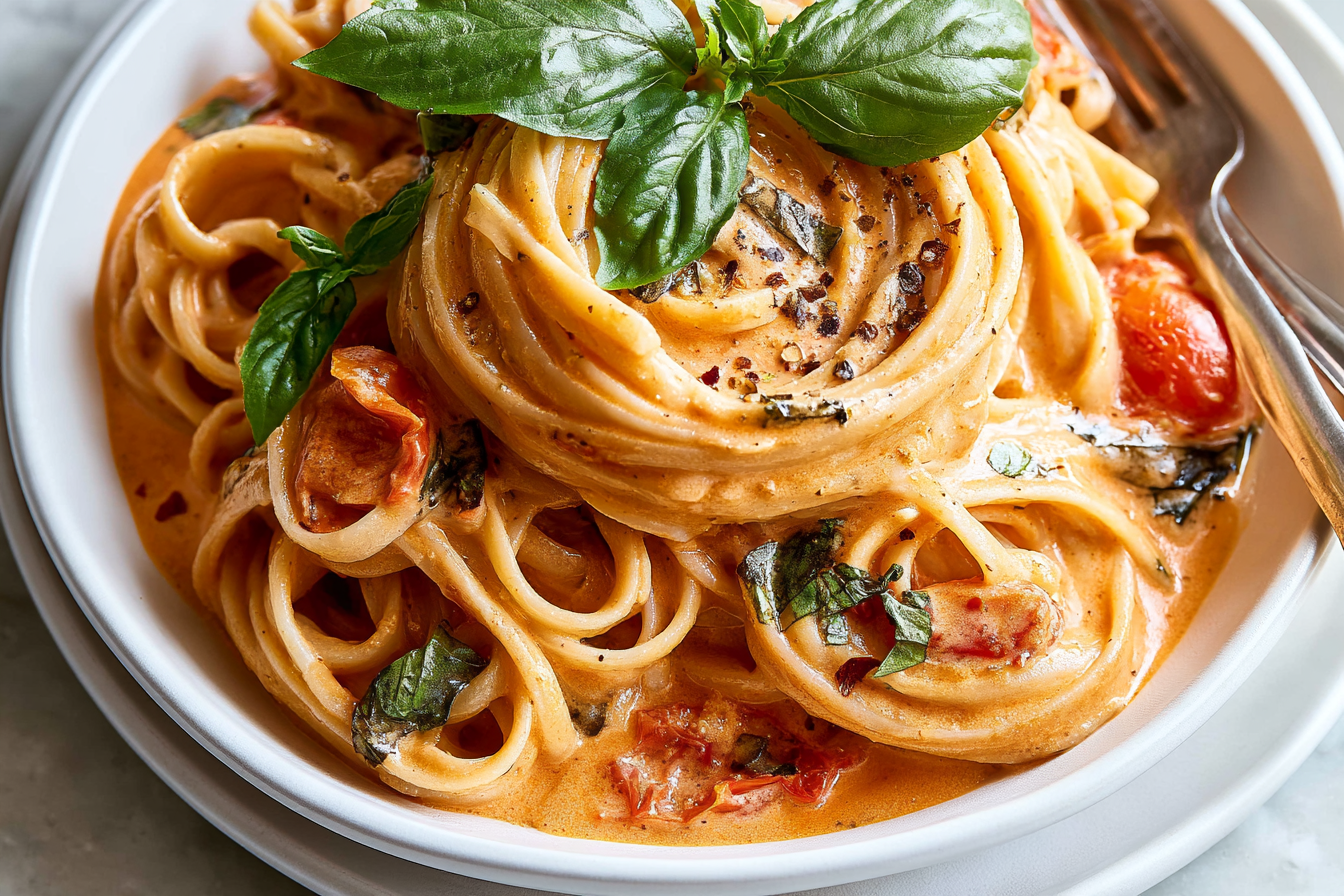
This version of Creamy Tomato Pasta is built for busy nights: minimal hands-on time, pantry-friendly ingredients, and a finish that tastes like you simmered the sauce for hours. It uses fresh tomatoes when you have them and canned when you don’t, and finishes with cream and Parmesan so the sauce feels indulgent without being heavy.
Ingredients
For the pasta and base
- 12 oz (340 g) dried spaghetti or your favorite long pasta
- 1 tbsp olive oil
- 4 cloves garlic, thinly sliced
- 1 small onion, finely chopped (about 3/4 cup)
- 1/2 tsp red pepper flakes (optional, for warmth)
For the tomato cream sauce
- 1 lb (450 g) ripe tomatoes, chopped, or 1 (28 oz) can crushed tomatoes
- 1 cup low-sodium chicken or vegetable broth
- 1/2 cup heavy cream (or half-and-half for a lighter finish)
- 1/2 cup freshly grated Parmesan, plus extra for serving
- 2 tbsp tomato paste (for depth)
- Salt and freshly ground black pepper, to taste
- Handful of fresh basil leaves, torn
Why this Creamy Tomato Pasta works
The trick is building flavor in layers: sautéing garlic and onion first to coax out sweetness, then concentrating tomato flavor with a little tomato paste and a brief simmer. Adding cream softens the acidity and the Parmesan brings savory umami that makes the sauce cling to pasta.
You’ll get those sun-warmed tomato notes whether you use fresh or canned tomatoes — the method makes each option sing.
Step-by-step: How to make Creamy Tomato Pasta (One Pot)
1) Heat and soften aromatics (5 minutes)
Heat the olive oil in a large, heavy-bottomed skillet or shallow pot over medium heat. Add the chopped onion and a pinch of salt. Cook until translucent and soft, about 4–5 minutes, stirring occasionally.
Add the sliced garlic and red pepper flakes. Stir for 30–45 seconds until fragrant — you’ll smell the garlic bloom but be careful not to let it brown.
2) Build the tomato base (6–8 minutes)
Stir in the tomato paste and cook for 1 minute to deepen the flavor. Add the chopped fresh tomatoes or canned crushed tomatoes and the broth. Increase heat to medium-high so the mixture comes to a gentle boil, then lower to a steady simmer.
Note: If your fresh tomatoes are very watery, let the mixture simmer a touch longer to reduce; canned tomatoes usually need less time.
3) Add the pasta and cook in the sauce (10–12 minutes)
Add the dried pasta to the pot, pressing it into the sauce so it’s mostly covered. Add more broth or a splash of water if the liquid doesn’t reach the pasta. Bring to a simmer and cook, stirring frequently to prevent sticking, until the pasta is al dente — follow the package time minus 2 minutes as a guideline.
Tip: Stir every couple of minutes and gently turn the pasta so it cooks evenly. The starchy pasta water will thicken the sauce as it cooks.
4) Finish with cream, cheese, and herbs (2–3 minutes)
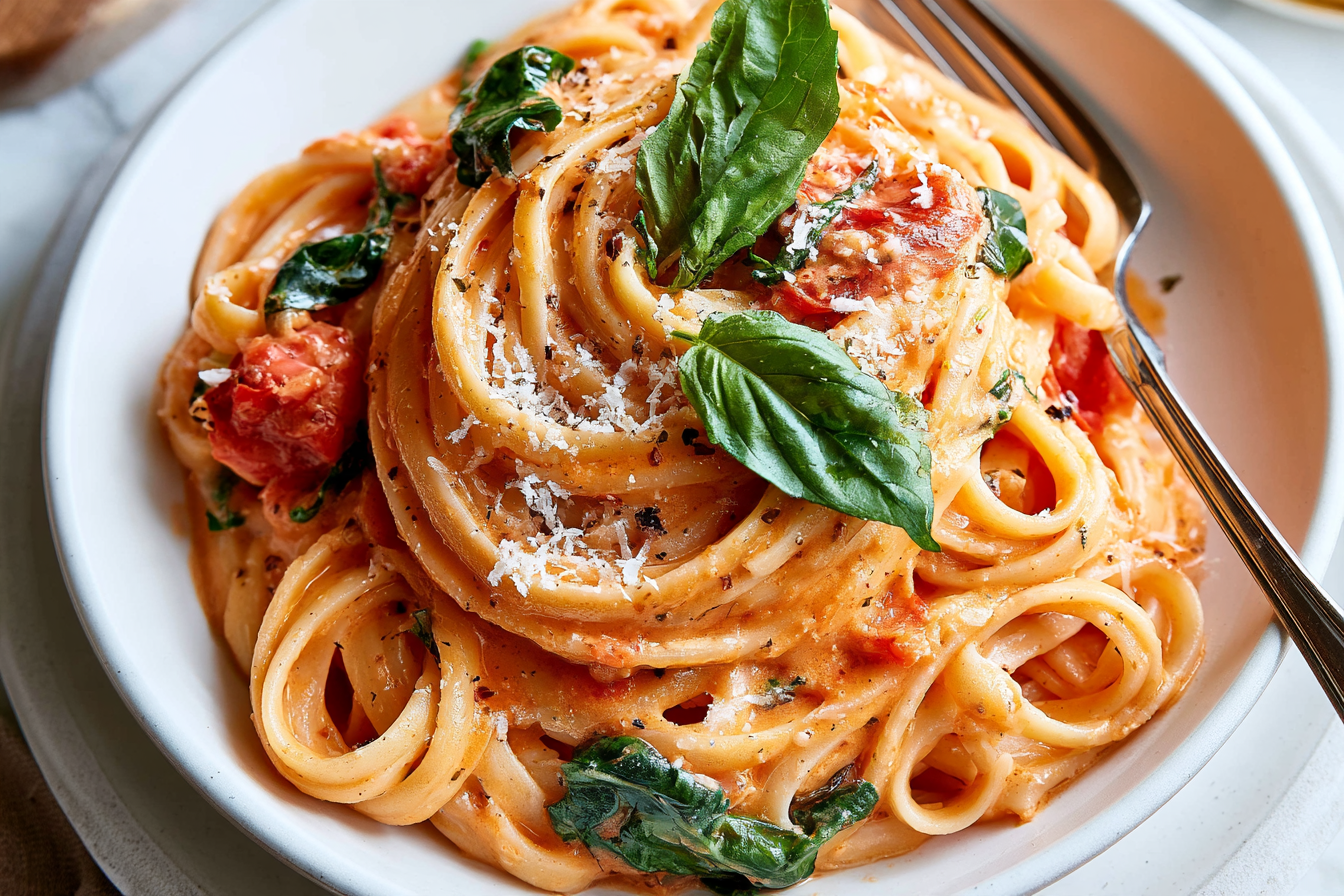
Lower the heat to medium-low. Stir in the heavy cream and grated Parmesan until melted and silky. Taste and adjust seasoning with salt and pepper. Stir in torn basil leaves for brightness.
If the sauce is too thick, add a splash of reserved pasta cooking water or broth to loosen it.
5) Serve and garnish
Divide among bowls and finish with an extra shower of Parmesan, a drizzle of olive oil, and a few fresh basil leaves. Black pepper freshly cracked on top adds a lively finish.
Ingredient spotlight & smart substitutions
If you’re short on heavy cream, use half-and-half plus a tablespoon of butter for richness. For a dairy-free twist, swap the cream for canned coconut milk (use full-fat) and replace Parmesan with a tablespoon of nutritional yeast and a pinch of salt — the flavor will shift but still be comforting.
Want more veg? Stir in baby spinach or sliced mushrooms in step 2 so they soften while the sauce reduces. For protein, folded-in cooked chicken or roasted chickpeas both work well.
Common mistakes and how to avoid them
- Overcooking garlic: add it later in the onion step and watch the color; burnt garlic tastes bitter.
- Pasta sticking: stir often when cooking pasta in the sauce and make sure there’s enough liquid to cover most of the noodles.
- Sauce too thin: simmer uncovered a little longer to reduce, or stir in more Parmesan to thicken.
- Sauce too salty: use low-sodium broth and taste before you add extra salt — Parmesan adds saltiness too.
Make-ahead, storage, and reheating
You can store leftovers in an airtight container in the fridge for up to 3 days. The sauce will tighten as it cools — loosen it with a splash of milk or broth when reheating.
Reheat gently on the stove over low heat or in the microwave in 30-second bursts, stirring between intervals. If freezing, omit the cream: freeze the tomato base, then add cream when you reheat to keep the texture bright.
Serving suggestions and pairings
A crisp green salad with lemony vinaigrette cuts through the creaminess beautifully. If you’re serving wine, a chilled Pinot Grigio or a light Sangiovese matches the tomato brightness.
For crunch, toss toasted breadcrumbs with olive oil and scatter over the pasta; for a smoky edge, top with a few torn strips of prosciutto or grilled sausage slices.
Variations and flavor twists
– Rosé-style: Use less cream and more broth for a lighter, rosé-colored sauce.
– Spicy vodka take: Add 2 tbsp vodka when the tomatoes are simmering and continue; it lifts flavors and gives a subtle sharpness.
– Herb-forward: Swap basil for fresh oregano and parsley for a greener herb profile.
FAQ
Can I make this recipe gluten-free?
Yes — use your favorite gluten-free pasta and keep an eye on the cook time since gluten-free shapes can have different textures. The one-pot method works just as well.
What’s the best tomato to use for a bright sauce?
Summer-ripe plum tomatoes (like Roma) or San Marzano canned tomatoes are ideal for bright flavor. If you have supermarket tomatoes mid-winter, a high-quality canned crushed tomato often tastes better.
Can I skip the cream and still have a silky sauce?
Absolutely. Stir in extra Parmesan and a knob of butter for silkiness, or use whole milk with a bit of cornstarch slurry (1 tsp cornstarch mixed with 2 tbsp milk) to thicken without cream.
How do I avoid a watery sauce when using fresh tomatoes?
Cook fresh tomatoes down a bit longer to concentrate them. Crushing them by hand first helps release juices, which you then let reduce to the right consistency before adding pasta.
Is this method suitable for short pasta shapes?
Yes. Use a wider pot so the short pasta has room to move and ensure the liquid covers the pasta as much as possible. Short shapes will take slightly less time to cook through.
Final notes and small chef tricks
If you like a touch of tang, stir in a teaspoon of lemon zest at the very end. For extra depth, a splash of balsamic vinegar (about 1 tsp) adds gentle sweetness. And remember: a generous grate of Parmesan at the table always elevates the dish.
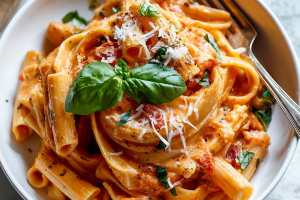
Creamy Tomato Pasta (One Pot)
Quick one pot creamy tomato pasta with garlic, fresh or canned tomatoes, and Parmesan—perfect for weeknight dinners.
🛒 Ingredients
👩🍳 Instructions
Use canned tomatoes if fresh aren't flavorful. For dairy-free, swap cream for full-fat coconut milk and Parmesan for nutritional yeast. Store in fridge up to 3 days; reheat with a splash of broth or milk.