


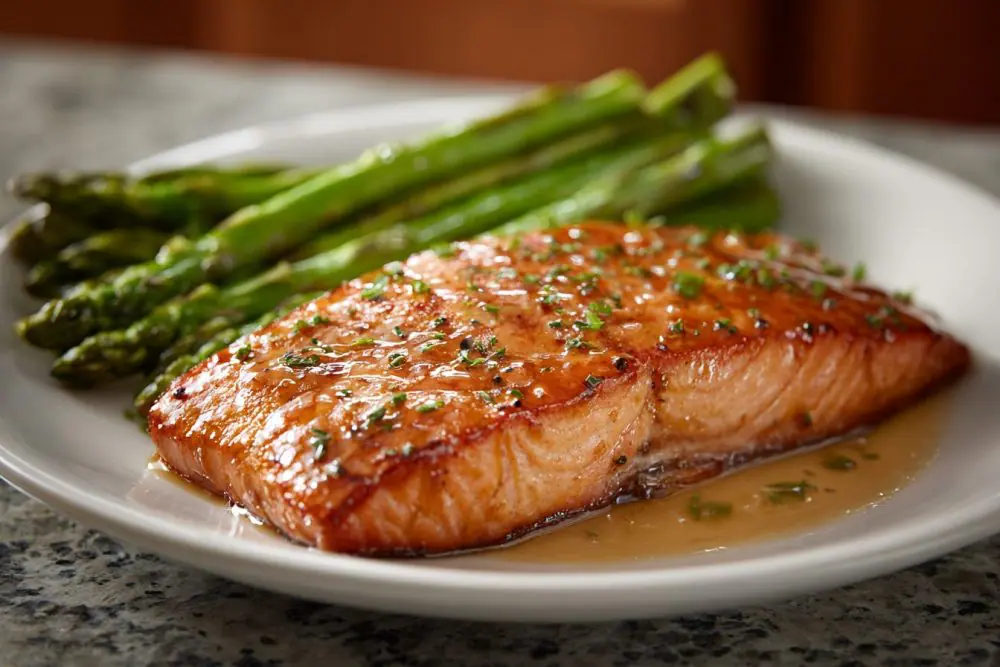
I used to think salmon was a fancy-pants, special occasion kind of fish, something you only ordered at a nice restaurant. Too intimidating to cook at home, too easy to mess up. Oh, how wrong I was! This sweet maple glazed salmon recipe completely changed my perspective, proving that a truly impressive meal can also be incredibly simple and ready in under 30 minutes.

Why This Maple Salmon Will Make You a Believer
What makes this particular recipe stand out from the crowd? It’s simple: the glaze. We’re not just brushing on some maple syrup; we’re building a multi-layered flavor profile that caramelizes beautifully under the broiler or in a hot pan. The tang of Dijon mustard, the subtle heat of a little cayenne, and the brightness of fresh lemon juice all play supporting roles to the star ingredient, creating a glaze that’s both complex and utterly crave-able. This isn’t just about taste, though. It’s also about texture. The high heat helps create a slightly crispy exterior on the salmon, while locking in its natural moisture, ensuring every bite is flaky and tender. It’s a delicate dance between sweet and savory, tender and crisp, that makes this dish an absolute joy to eat.Gather Your Flavor Makers: The Ingredients
You don’t need a complicated pantry for this one. Most of these items you might already have on hand, making this an ideal recipe for those nights you need something quick and delicious. We’re focusing on fresh, high-quality ingredients to let their natural flavors shine.For the Irresistible Maple Glaze
- Pure Maple Syrup: This is non-negotiable. Don’t skimp with pancake syrup! The real stuff provides a deep, rich sweetness and a beautiful sheen.
- Dijon Mustard: Adds a zesty tang that cuts through the sweetness and emulsifies the glaze.
- Fresh Lemon Juice: Brightens everything up and helps to balance the flavors.
- Garlic Powder: A hint of savory warmth. Fresh minced garlic works too, but powder blends seamlessly into the glaze.
- Cayenne Pepper: Just a pinch for a very subtle kick. Adjust to your preference.
- Soy Sauce (or Tamari): For umami depth and a touch of saltiness. Use tamari for a gluten-free option.
For the Perfect Salmon Fillets
- Salmon Fillets: Aim for skin-on or skin-off, about 6 oz each. Wild-caught sockeye or Atlantic salmon are both excellent choices. Aim for fillets roughly 1-inch thick, as they cook more evenly.
- Olive Oil: Just a touch for searing.
- Salt and Freshly Ground Black Pepper: To season the salmon before glazing.
For the Speedy Side Dish
- Fresh Asparagus: A perfect partner for salmon. Look for spears that are firm and vibrant green.
- Olive Oil: For tossing the asparagus.
- Salt and Pepper: To season the asparagus.
- Lemon Wedges: For serving, a squeeze of fresh lemon always elevates seafood.

Crafting Your Weeknight Masterpiece: Step-by-Step
This recipe is designed for maximum flavor with minimal fuss. We’ll get that glaze cooking, the salmon seared, and the asparagus tender-crisp in no time.Step 1: Prep the Players
Pat your salmon fillets very dry with paper towels. This is crucial for a good sear and crispy skin (if you’re leaving it on). Season both sides generously with salt and black pepper. Snap the woody ends off your asparagus spears; they’ll naturally break where they should.
Step 2: Whisk Up the Glaze
In a small bowl, combine the maple syrup, Dijon mustard, lemon juice, garlic powder, cayenne pepper, and soy sauce. Whisk everything together until it’s perfectly smooth and well combined. Give it a taste – if you like a little more kick, add another pinch of cayenne!
Step 3: Get Searing
Heat a large oven-safe skillet (cast iron or stainless steel works best) over medium-high heat. Add a tablespoon of olive oil. Once the oil is shimmering, carefully place the salmon fillets skin-side down (if applicable). Sear for 3-4 minutes until the skin is crispy and golden brown. If using skinless fillets, sear for 2-3 minutes per side until lightly golden.
Note: Don’t overcrowd the pan! If you’re cooking more than two fillets, sear them in batches to ensure good browning.
Step 4: Glaze and Roast
Flip the salmon fillets. Reduce the heat to medium. Brush about half of the maple glaze generously over the top of each fillet. Transfer the skillet to a preheated oven at 400°F (200°C) and roast for 5-7 minutes, depending on the thickness of your salmon. The salmon should be cooked through, flaking easily with a fork, and reach an internal temperature of 145°F (63°C).
Step 5: Asparagus Time
While the salmon is roasting, toss the trimmed asparagus with a drizzle of olive oil, salt, and pepper on a baking sheet. You can roast them alongside the salmon for the last 5-7 minutes, or if your oven is too full, quickly sauté them in another pan on the stovetop until tender-crisp, about 5-7 minutes.

Step 6: Final Glaze and Serve
Once the salmon is cooked, remove it from the oven. Brush the remaining glaze over the top of the hot salmon fillets. The residual heat will help the glaze set beautifully. Let the salmon rest for a minute or two before serving alongside your roasted asparagus and a fresh lemon wedge. A sprinkle of fresh parsley or chives adds a lovely finish!
Perfect Pairings & Serving Suggestions
This sweet maple glazed salmon is incredibly versatile and pairs well with a variety of sides. Beyond the grilled asparagus, consider serving it with fluffy quinoa, brown rice, or even a simple green salad with a light vinaigrette. If you’re feeling a bit more indulgent, some creamy mashed potatoes or a sweet potato mash would also be fantastic. The key is to choose sides that complement the richness of the salmon and the sweetness of the glaze without overpowering it. For a lighter meal, try it flaked over a bed of mixed greens with some cherry tomatoes and a light dressing. Or, for an Asian-inspired twist, serve it with some steamed edamame and a sprinkle of sesame seeds.Common Questions About Maple Glazed Salmon
Got questions? I’ve got answers! Here are some of the most common queries about making this delicious salmon.Why is my salmon not getting crispy skin?
The key to crispy salmon skin is making sure the fish is very dry before it hits the hot pan. Pat it thoroughly with paper towels. Also, ensure your skillet is hot enough before adding the salmon, and don’t overcrowd the pan, which can lower the temperature and steam the fish instead of searing it.
Can I make this recipe in the air fryer?
Absolutely! Air frying is a fantastic way to get perfectly cooked salmon. Preheat your air fryer to 375°F (190°C). Brush the salmon with half the glaze, then air fry for 8-12 minutes, flipping halfway and brushing with the remaining glaze, until cooked through and flaky. Cooking times may vary depending on the thickness of your fillets and your air fryer model.
What if I don’t have an oven-safe skillet?
No problem! You can sear the salmon in any skillet on the stovetop, then carefully transfer the seared fillets to a baking sheet lined with parchment paper before brushing with glaze and roasting in the oven. Same delicious results, just an extra dish to wash!
How do I know when the salmon is cooked perfectly?
Salmon is done when it flakes easily with a fork and reaches an internal temperature of 145°F (63°C) at its thickest part. Overcooked salmon can be dry, so it’s better to undercook it slightly and let it rest, as it will continue to cook a bit from residual heat.
Can I use frozen salmon for this recipe?
Yes, you can! Just be sure to thaw the salmon completely in the refrigerator overnight before cooking. Pat it extra dry before seasoning and searing. The cooking time should remain roughly the same as for fresh salmon.
Storing & Reheating Leftovers
If you happen to have any of this delicious sweet maple glazed salmon leftover (a rarity in my house!), it stores beautifully. Simply place any remaining salmon and cooked asparagus in an airtight container in the refrigerator for up to 3 days. To reheat, the best method is to gently warm it in a preheated oven at 275°F (135°C) for about 10-15 minutes, or until just warmed through. This prevents it from drying out. You can also microwave it on a low setting, but be careful not to overheat, as salmon can become tough quickly in the microwave. Leftover salmon is also fantastic flaked into a salad or made into salmon cakes the next day!Flavor Twists & Variations
While this recipe is perfect as is, don’t be afraid to experiment a little! Here are a few ideas to shake things up:- Spicy Kick: If you love heat, increase the cayenne pepper in the glaze or add a dash of sriracha or red pepper flakes.
- Ginger-Garlic Boost: Add a teaspoon of grated fresh ginger to the glaze for an aromatic, zesty twist.
- Herbaceous Notes: Stir in a tablespoon of fresh chopped rosemary or thyme into the glaze for an earthy depth.
- Orange Zest: For a brighter, citrusy flavor, add a teaspoon of orange zest along with the lemon juice to the glaze.
- Soy-Free: If you’re avoiding soy, use coconut aminos as a direct substitute for the soy sauce in the glaze.

Sweet Maple Glazed Salmon Fillets with Grilled Asparagus
Indulge in tender salmon coated in a luscious maple syrup glaze, perfectly balanced with savory notes. An easy, impressive meal.
📝 Ingredients
👩🍳 Instructions
- 1Preheat your oven to 400°F (200°C).
- 2Pat the salmon fillets very dry with paper towels. Season both sides generously with salt and black pepper.
- 3In a small bowl, whisk together the maple syrup, Dijon mustard, lemon juice, garlic powder, cayenne pepper, and soy sauce until well combined. This is your maple glaze.
- 4Heat 1 tablespoon of olive oil in a large oven-safe skillet (cast iron is excellent) over medium-high heat until shimmering. Carefully place the salmon fillets, skin-side down if applicable, in the hot skillet. Sear for 3-4 minutes until the skin is crispy and golden brown. If skinless, sear for 2-3 minutes per side until lightly golden.
- 5Flip the salmon fillets. Reduce the heat to medium. Brush about half of the maple glaze generously over the top of each fillet.
- 6Transfer the skillet to the preheated oven and roast for 5-7 minutes, or until the salmon is cooked through and flakes easily with a fork (internal temperature of 145°F/63°C).
- 7While the salmon roasts, toss the trimmed asparagus with a drizzle of olive oil, salt, and pepper on a baking sheet. You can roast them alongside the salmon (if space allows) for the last 5-7 minutes, or cook them separately on the stovetop or grill until tender-crisp.
- 8Once the salmon is cooked, remove the skillet from the oven. Brush the remaining glaze over the top of the hot salmon fillets. Let the salmon rest for 1-2 minutes.
- 9Serve the sweet maple glazed salmon immediately with the roasted asparagus and fresh lemon wedges.
💡 Notes
Ensure salmon is patted very dry for best searing. For a spicier glaze, increase cayenne or add a dash of sriracha. Leftovers can be stored in an airtight container in the fridge for up to 3 days and gently reheated in the oven.