


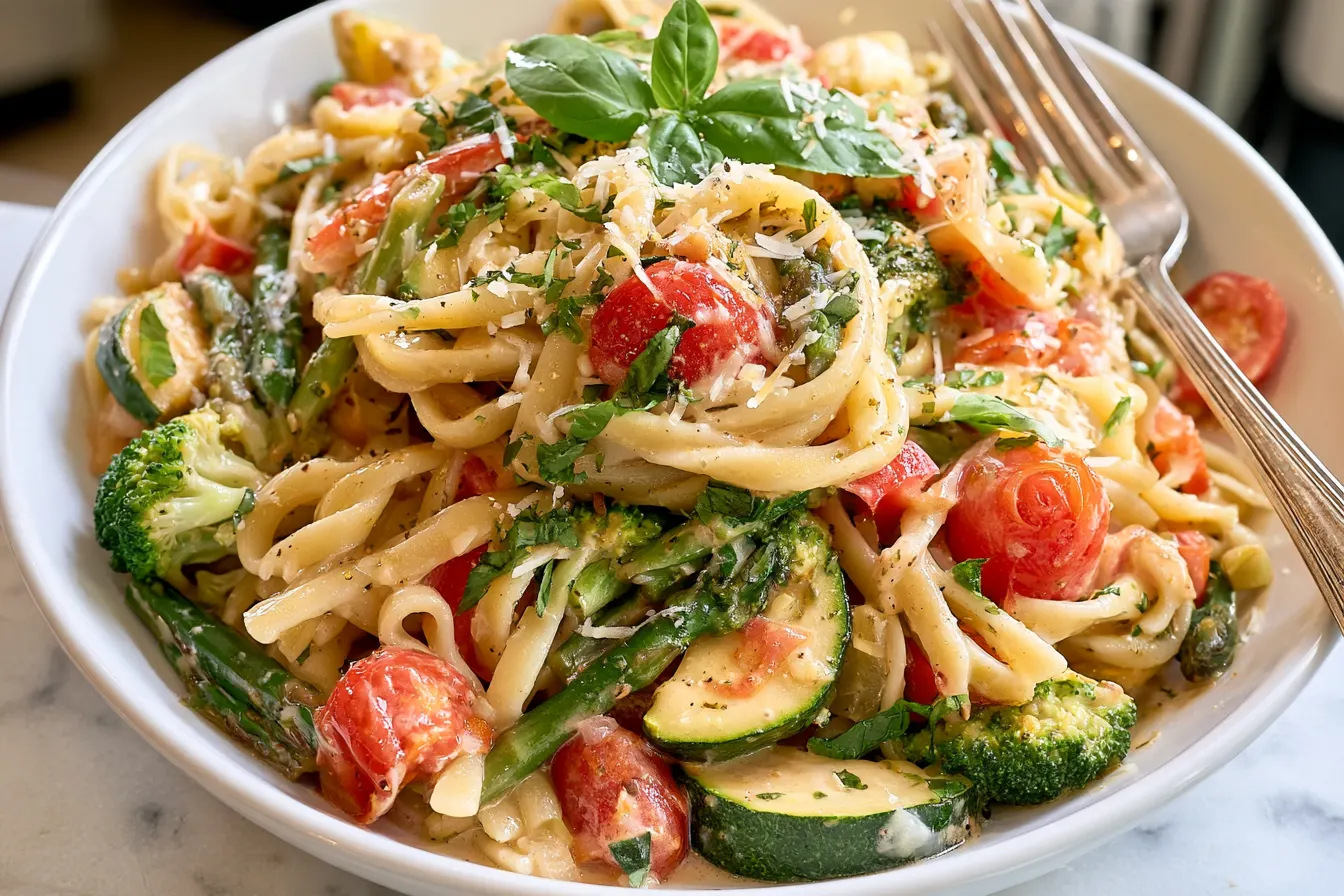
Pasta Primavera is the kind of dinner that smells like spring and looks like a celebration — bright veggies, tender penne, and a silky Parmesan-herb sauce that clings to every bite.
- Why this Pasta Primavera works
- Ingredients
- Pasta Primavera — Step-by-step
- What makes this version different
- Ingredient spotlight & substitutions
- Common mistakes and how to avoid them
- Make-ahead, meal prep, and freezing
- Serving suggestions and pairings
- Variations and flavor twists
- Storage & reheating
- FAQ
- Final thoughts
The first time I made this, I’d bought too many cherry tomatoes at the farmers’ market and needed a quick, pretty way to use them. What started as a fridge-cleaning meal became a favorite: simple, comforting, and un-fussy enough for weeknights yet elegant enough for guests.
There’s a satisfying contrast here — crisp-tender vegetables against pillowy pasta, lemony brightness offset by creamy cheese. If you want a meatless pasta that feels substantial without being heavy, this Pasta Primavera is a small, reliable miracle.
Why this Pasta Primavera works
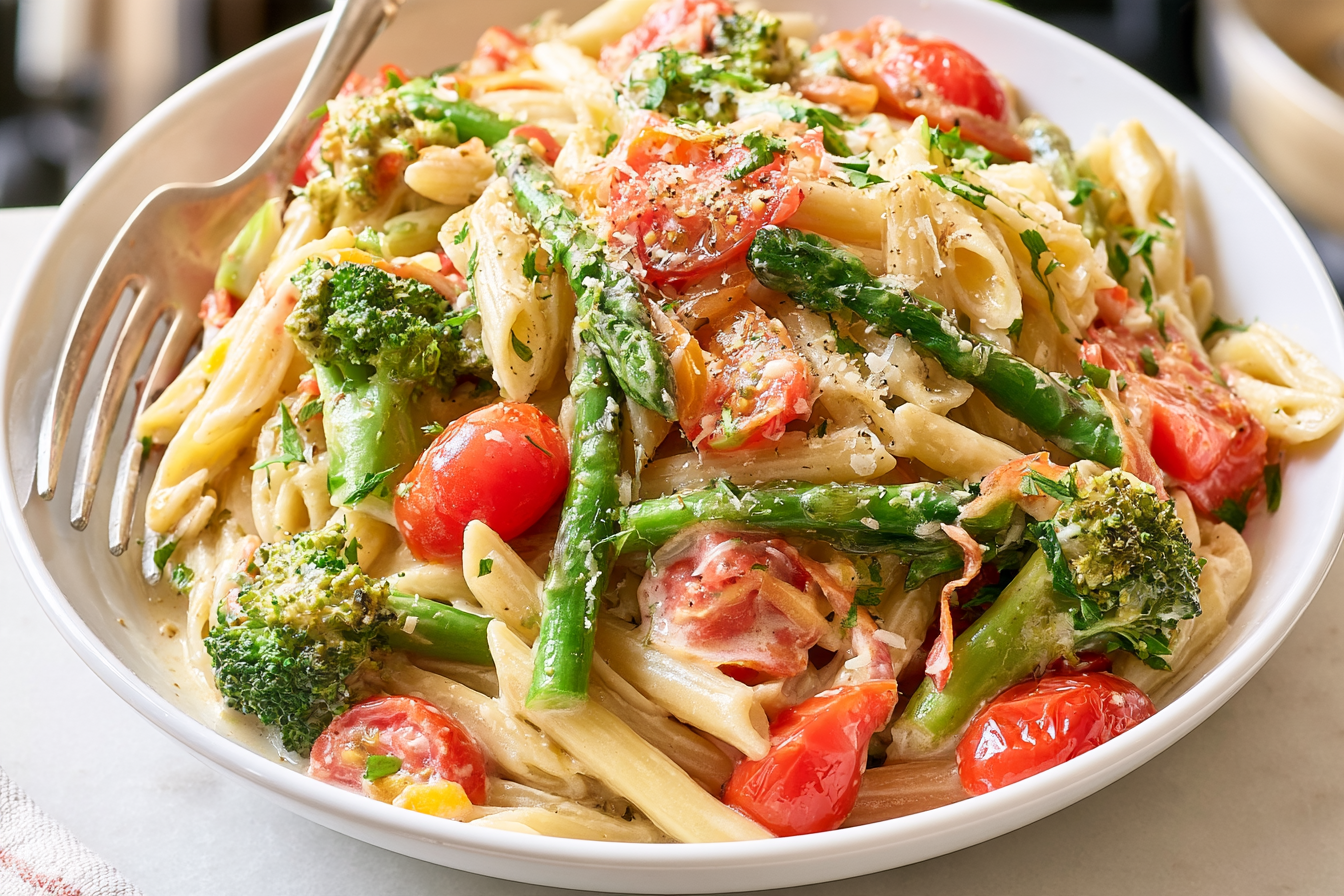
This recipe balances texture and flavor. Short pasta like penne catches the sauce and little nooks of vegetables, while a touch of cream (just a splash) and freshly grated Parmesan make the sauce cling without drowning the produce.
I keep the vegetables slightly undercooked on purpose so they stay bright and lively. The trick is to stagger cooking times — softer vegetables join the pan later, and quick-cooking items get tossed in right at the end.
Because it’s versatile, you can swap in what’s seasonal: asparagus in spring, colorful bell peppers in summer, or small broccoli florets in early fall. The sauce is forgiving; it’ll come back together with a bit of pasta water if it separates.
Ingredients
For the pasta and base
- 12 ounces penne pasta (or rigatoni, fusilli)
- Salt for the pasta water — about 1–2 tablespoons
- 2 tablespoons olive oil
- 2 cloves garlic, thinly sliced
- 1 small shallot, finely chopped
Vegetables
- 1 cup cherry tomatoes, halved
- 1 cup asparagus, trimmed and cut into 1-inch pieces
- 1 small zucchini, sliced into half-moons
- 1 cup frozen peas, thawed (or fresh if you have them)
- 1/2 cup thinly sliced red bell pepper (optional)
Sauce
- 2 tablespoons unsalted butter
- 1/2 cup heavy cream (or half-and-half for a lighter version)
- 3/4 cup freshly grated Parmesan (more for serving)
- Zest and juice of 1 lemon
- 1/4 cup chopped fresh basil
- 2 tablespoons chopped fresh parsley
- Freshly ground black pepper to taste
To finish
- Red pepper flakes (optional)
- Extra virgin olive oil for drizzling
- Flaky sea salt for finishing
Pasta Primavera — Step-by-step
1. Bring the pasta water to a boil
Fill a large pot with water and bring it to a rolling boil. Salt it generously — the water should taste like the sea. Add the penne and cook until just shy of al dente (about 1–2 minutes less than the package directs).
Note: Reserve 1 to 1 1/2 cups of starchy pasta water before draining. That liquid is gold for loosening the sauce and helping it cling to the pasta.
2. Sauté aromatics and quick-cook vegetables
While the pasta cooks, heat olive oil in a large, wide skillet over medium heat. Add shallot and garlic and sauté until fragrant and translucent, about 1–2 minutes. Watch the garlic — it should smell toasty, not bitter.
Add asparagus and bell pepper first, sautéing until they begin to color and soften, about 3–4 minutes. Stir in zucchini and cook another 2 minutes. Toss in the peas and cherry tomatoes last — you want the tomatoes warmed through but not collapsed.
3. Make the creamy Parmesan-herb sauce
Push the vegetables to the side of the pan and add the butter. When it foams, pour in the cream and let it warm until it’s just beginning to simmer — no rolling boil. Remove from heat, whisk in the Parmesan until smooth, then stir in lemon zest and a splash of lemon juice.
Tip: If the sauce is too thick, add reserved pasta water a few tablespoons at a time until it reaches a glossy, clingy consistency. The starchy water helps emulsify the sauce and keeps it silky.
4. Combine pasta, sauce, and herbs
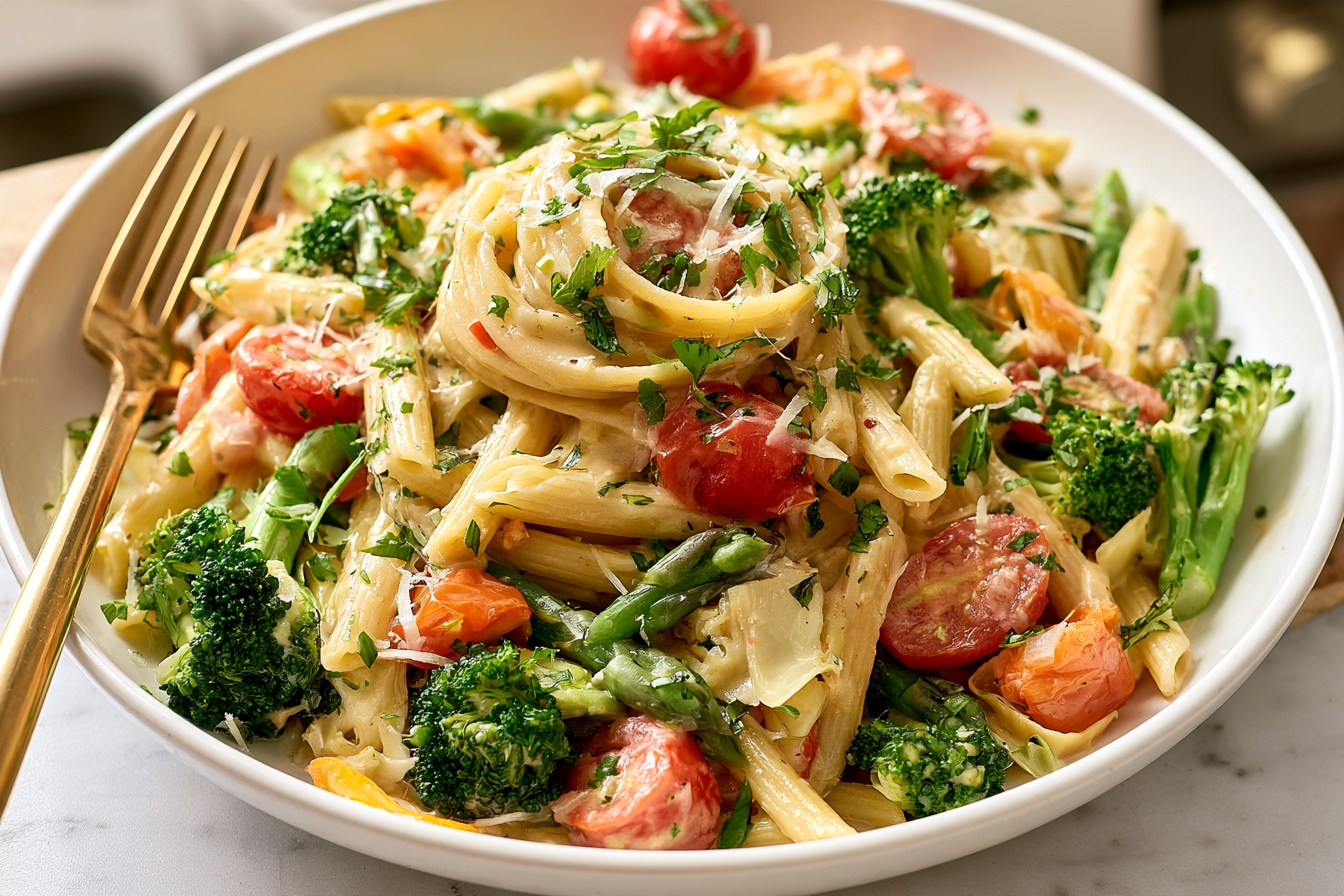
Add the drained penne directly to the skillet with the vegetables and sauce. Over low heat, toss everything together, adding pasta water as needed to achieve a smooth coating. Stir in chopped basil and parsley and check seasoning.
Finish with a drizzle of extra virgin olive oil and a scatter of extra Parmesan. Taste for salt and pepper — lemon juice brightens, so don’t be shy with it if it needs lift.
5. Plate and garnish
Serve warm with a final sprinkle of flaky sea salt and red pepper flakes if you like a touch of heat. A few torn basil leaves on top make it look like you spent longer in the kitchen than you did.
What makes this version different
Many Pasta Primavera recipes go heavy on butter or cream; I keep the cream modest and rely on bright lemon and fresh herbs to keep the dish lively. That way the vegetables remain the star — colorful, textured, and tasting like themselves.
I also use a mix of quick-cooking veggies and slightly firmer ones, staged into the pan by timing. That gives each bite contrast: crispy asparagus tips, juicy tomatoes, and tender zucchini all in the same forkful.
Ingredient spotlight & substitutions
Parmesan: Freshly grated Parm is non-negotiable for texture and flavor. Pre-grated powders won’t melt the same way.
Cream: If you want less dairy, swap half the cream for vegetable broth and finish with a tablespoon of butter for richness. For a dairy-free take, use full-fat coconut milk and a vegan Parmesan substitute, but expect a subtle flavor shift.
Pasta: Short-tube pasta is ideal here — penne, rigatoni, or ziti. Long pasta like spaghetti works, too; just toss carefully to keep the vegetables from sliding off.
Common mistakes and how to avoid them
Overcooking vegetables — keep them crisp. Cook in stages and pull them off the heat while they still have bite.
Adding cheese to very hot cream can cause stiffness. Remove the cream from high heat before whisking in Parmesan.
Not reserving pasta water — without it the sauce can be gluey or too thick. The starchiness transforms texture and cohesion.
Make-ahead, meal prep, and freezing
Make-ahead: You can prepare the vegetables and aromatics a day in advance and store in the fridge. Keep the sauce components separate and assemble just before serving.
Meal prep: Portion into airtight containers and refrigerate up to 3 days. Reheat gently in a skillet with a splash of water or broth to revive the sauce.
Freezing: I don’t recommend freezing once the sauce has cream and fresh veggies — the texture suffers. If you want a freezer-friendly version, skip the cream and freeze the veggies and pasta separately with a light tomato-based sauce instead.
Serving suggestions and pairings
This Pasta Primavera pairs beautifully with a crisp, dry white wine — Pinot Grigio or a young Sauvignon Blanc. For non-alcoholic options, a chilled sparkling water with lemon complements the lemon in the dish.
Serve alongside a simple green salad dressed with lemon vinaigrette or a crusty loaf of bread to sop up any silky sauce. For added protein, pan-seared chicken or sautéed shrimp fold right in.
Variations and flavor twists
- Herby lemon: Add extra lemon zest and finish with dill for a bright, herb-forward version.
- Spicy tomato: Stir in 1/2 cup crushed tomatoes and a pinch of smoked paprika for a tomato-cream spin.
- Pesto swap: Replace half the Parmesan with 2-3 tablespoons pesto for basil-forward richness.
Storage & reheating
Refrigerate leftovers in an airtight container for up to 3 days. Reheat gently in a skillet with 1–2 tablespoons of water or broth, stirring constantly to bring the sauce back to life.
If the sauce separates or looks grainy, a splash of warm cream or a knob of butter whisked in off heat will smooth it out.
FAQ
Can I make this Pasta Primavera dairy-free?
Yes. Use a plant-based cream (oat or coconut cream work) and a vegan Parmesan substitute. Skip lemon zest if the coconut flavor is too assertive and add extra herbs to balance.
What other pasta shapes work besides penne?
Short shapes with ridges or tubes (rigatoni, fusilli, farfalle) are ideal because they trap sauce and bits of vegetable. Thin long pasta works but needs gentler tossing.
How do I keep the vegetables crisp instead of soggy?
Cook in stages and stop cooking the vegetables a touch early. Carryover heat will finish them. Also, avoiding overcrowding the pan prevents steaming, which leads to limp veggies.
Can I prepare this ahead for guests?
Yes. Cook the pasta slightly underdone and the vegetables until nearly done. Reheat and finish the sauce just before serving so everything feels freshly made.
Is it possible to add protein to make it more filling?
Absolutely. Add grilled chicken, pan-seared shrimp, or white beans. Toss in cooked protein at the same time as the pasta to warm through before serving.
Final thoughts
This Pasta Primavera is one of those recipes that gets better the more you make it — you’ll learn the timings of your favorite vegetables and find the exact lemon-cheese balance you prefer. It’s forgiving, fast, and pretty enough to bring to the table when you want weeknight simplicity with a restaurant feel.
Give it a whirl on a market-run evening, and let the colors do half the work for you. The rest is just salt, heat, and a little attention to timing.

Pasta Primavera with Creamy Parmesan Herb Sauce
A colorful penne Pasta Primavera tossed with spring vegetables and a creamy Parmesan-herb sauce — easy, bright, and meatless.
🛒 Ingredients
👩🍳 Instructions
Reserve pasta water to adjust sauce consistency. For a lighter dish, use half-and-half or swap half the cream for vegetable broth. Make ahead by prepping vegetables and aromatics; assemble and finish the sauce just before serving. Store leftovers in the refrigerator up to 3 days and reheat gently with a splash of water or broth.