


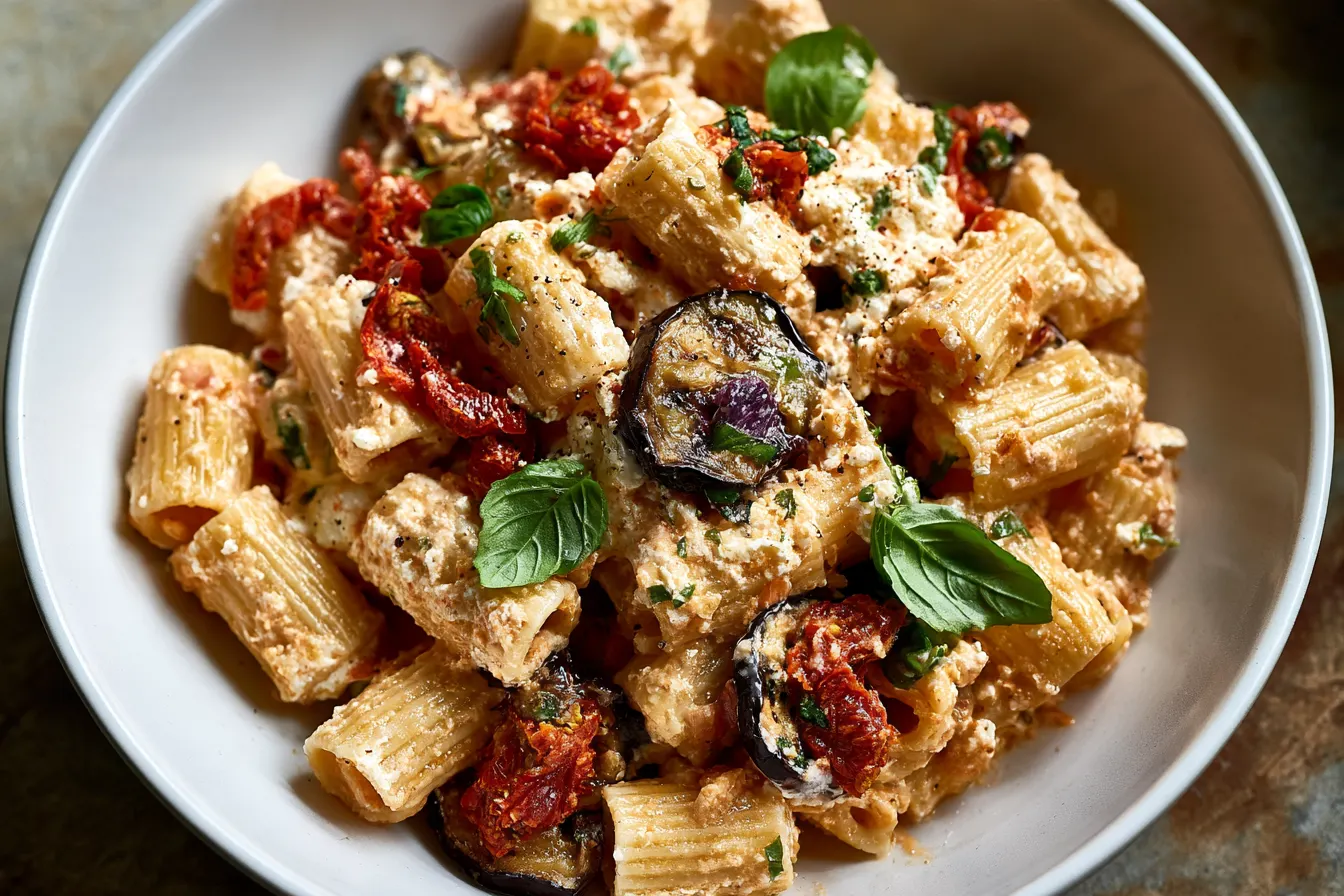
This eggplant sun-dried tomato ricotta pasta is the sort of dinner I reach for when I want something that feels special but doesn’t demand a staging crew — smoky roasted eggplant, chewy sun-dried tomatoes and a silky ricotta sauce, all ready in about 25 minutes.
- Why this eggplant sun-dried tomato ricotta pasta works
- Ingredient highlights and smart swaps
- Ingredients
- Step-by-step: cooking the eggplant sun-dried tomato ricotta pasta
- Common mistakes and how to avoid them
- Make-ahead, storage, and reheating
- Serving ideas and pairings
- Variations and flavor twists
- FAQ
- Final notes from my kitchen
There’s a comforting clack of a wooden spoon on a hot pan and the warm, tangy perfume of tomato and garlic — it’s the kind of kitchen smell that fills the apartment and makes everyone wander in. The recipe is flexible: make it with short pasta for weeknights, or splurge on big ribbons when you’re showing off.

This version balances creamy ricotta with bright sun-dried tomato tang and caramelized eggplant for a vegetarian pasta that’s both quick and deeply satisfying. It’s a weeknight winner and elegant enough for guests.
Why this eggplant sun-dried tomato ricotta pasta works
The trio of textures — soft roasted eggplant, the slightly chewy sun-dried tomatoes, and pillowy ricotta — gives every forkful interest. A splash of lemon and a handful of herbs wakes the ricotta up so the sauce never feels heavy.
Roasting or pan-searing the eggplant until it’s browned adds smoky depth that pairs beautifully with the concentrated umami in sun-dried tomatoes. A few minutes of pasta water stirred in turns ricotta into a saucy, glossy coating rather than a clumpy topping.
Ingredient highlights and smart swaps
Use whole-milk ricotta for the creamiest result; part-skim will work but the sauce will be less lush. Sun-dried tomatoes packed in oil melt into the sauce more nicely than the dry-packed ones — if you only have the latter, rehydrate them in hot water for 10 minutes.
Eggplant can be temperamental: choose one that feels heavy and smooth. If you’re short on time, substitute zucchini (cook it a little less) or add roasted bell peppers for a different, sweeter flavor profile.

Ingredients
For the pasta and sauce
- 12 oz (340 g) short pasta (penne, rigatoni, fusilli)
- 1 1/2 cups whole-milk ricotta
- 1/2 cup sun-dried tomatoes in oil, drained and roughly chopped
- 1/4 cup extra-virgin olive oil (plus more if needed)
- 3 cloves garlic, thinly sliced
- Salt and freshly ground black pepper
- Zest and juice of 1 small lemon
For the vegetables
- 1 large eggplant (about 1 lb / 450 g), cut into 1-inch cubes
- 1 small red onion, thinly sliced
- 2 tbsp olive oil for cooking eggplant
- Pinch of red pepper flakes (optional)
To finish
- 1/3 cup grated Parmesan or Pecorino (optional)
- Handful of fresh basil leaves, torn
- Toasted pine nuts or walnuts for crunch (optional)
Step-by-step: cooking the eggplant sun-dried tomato ricotta pasta
1. Prep the pasta water and eggplant
Put a large pot of salted water on to boil for the pasta. While it heats, toss the eggplant cubes with 2 tbsp olive oil and a generous pinch of salt. Let them sit for 5 minutes so they start to release moisture.
2. Brown the eggplant and soften the onion
Heat a large skillet over medium-high heat until shimmering. Add the eggplant in a single layer — you may need to do this in batches — and let it brown without stirring for 3–4 minutes, then stir and brown another 2 minutes until tender and golden.
Add the sliced red onion to the pan and cook 3 minutes until softened. Stir in the garlic and a pinch of red pepper flakes and cook until fragrant, about 30 seconds.
3. Cook the pasta al dente
Cook the pasta according to package instructions but subtract 1–2 minutes from the lower end of the range so it finishes in the sauce. Reserve 1 to 1 1/2 cups of starchy pasta water before draining.
4. Build the ricotta sauce
Lower the skillet heat to medium. Add the chopped sun-dried tomatoes and 1/4 cup olive oil to the eggplant and onion mixture, stirring to warm through. Spoon in the ricotta, then add 1/2 cup of the reserved pasta water and stir vigorously.
Tip: If the sauce feels too thick, add more pasta water a little at a time until it’s glossy and coats the back of a spoon. The starch in the water makes the ricotta silky.

5. Combine pasta and sauce
Add the drained pasta to the skillet and toss to coat. If the pan is small, return the pasta to the pot and pour the sauce over it, stirring to combine. Add lemon zest and juice, taste for seasoning and adjust with salt, pepper, or another splash of olive oil.
Note: Add grated Parmesan here if you want more savory depth, or skip it for a lighter, cheesier ricotta-forward flavor.
6. Serve and garnish
Plate the pasta with torn basil and a few toasted nuts for crunch. Drizzle a tiny bit more olive oil and scatter extra grated cheese if using. Serve warm; the dish tastes excellent at room temperature too.
Common mistakes and how to avoid them
Overcrowding the eggplant pan keeps it from browning; brown in batches for color and flavor. Using dry-packed sun-dried tomatoes without rehydrating leaves a tough texture; rehydrate or use oil-packed tomatoes.
Adding ricotta to a scalding hot pan can make it separate — keep the heat moderate and stir quickly with pasta water to emulsify it into a sauce.
Make-ahead, storage, and reheating
Store leftover pasta in an airtight container for up to 3 days. The sauce firms in the fridge; loosen it by stirring in a splash of olive oil or a tablespoon or two of water before reheating. Reheat in a skillet over low heat until warmed through, adding liquid as needed.
For make-ahead meal prep: cook the eggplant and onion and store separately from the ricotta. When ready, warm the veggies, toss with hot pasta and ricotta mixture for the freshest texture.
Serving ideas and pairings
Serve this pasta with a crisp green salad and a bright vinaigrette to cut the richness. A crusty garlic bread or a simple pan of roasted cherry tomatoes pairs beautifully.
For wines, look for a medium-bodied red with bright acidity such as Chianti, or a citrusy Vermentino if you prefer white.
Variations and flavor twists
- Add roasted mushrooms for extra umami.
- Stir in wilted spinach or arugula at the end for color and a peppery bite.
- Swap burrata for ricotta if you want an indulgent, runnier finish — add it at the last minute so it remains creamy.
FAQ
Can I make this pasta vegan?
Yes. Replace ricotta with a blended tofu ricotta (silken tofu with lemon, nutritional yeast, garlic and salt) and skip the Parmesan. Use oil-packed sun-dried tomatoes for richness.
What if I only have dry-packed sun-dried tomatoes?
Rehydrate by soaking them in hot water for 10–15 minutes, then chop. Reserve a little soaking liquid to add depth to the sauce if needed.
How should I cook eggplant to avoid bitterness and sogginess?
Choose fresh, firm eggplant and don’t salt it excessively beforehand; instead, give the cubes a quick toss with oil and spread them in a hot pan so they brown rather than steam. High heat and space are key.
Is this pasta freezer-friendly?
It’s better fresh. Freezing will change the texture of the ricotta and eggplant. If you must freeze, cook the pasta slightly underdone and freeze in a sauce-joined container; thaw overnight in the fridge and reheat gently with added liquid.
Can I make this with long pasta?
Absolutely. Tagliatelle, pappardelle, or linguine work nicely — they pick up the ricotta sauce differently but still taste great. Toss gently to avoid breaking long strands.
Final notes from my kitchen
I love this pasta because it’s forgiving and full of personality. A couple of small adjustments — a squeeze of lemon, a handful of herbs, or toasting some nuts — transforms simple ingredients into something memorable.
If you try it, send a photo or tell me which variation you loved. I rarely make the exact same version twice either; sometimes I add olives, sometimes I throw in a handful of spinach. That’s the joy of pasta — tiny swaps lead to delicious detours.

Eggplant Sun-Dried Tomato Ricotta Pasta
Creamy ricotta pasta with roasted eggplant and sun-dried tomatoes — ready in 25 minutes for a quick, vegetarian weeknight dinner.
🛒 Ingredients
👩🍳 Instructions
Use whole-milk ricotta for the creamiest sauce. If using dry-packed sun-dried tomatoes, rehydrate in hot water for 10–15 minutes. Store leftovers in an airtight container for up to 3 days; loosen sauce with a splash of olive oil or water when reheating.