


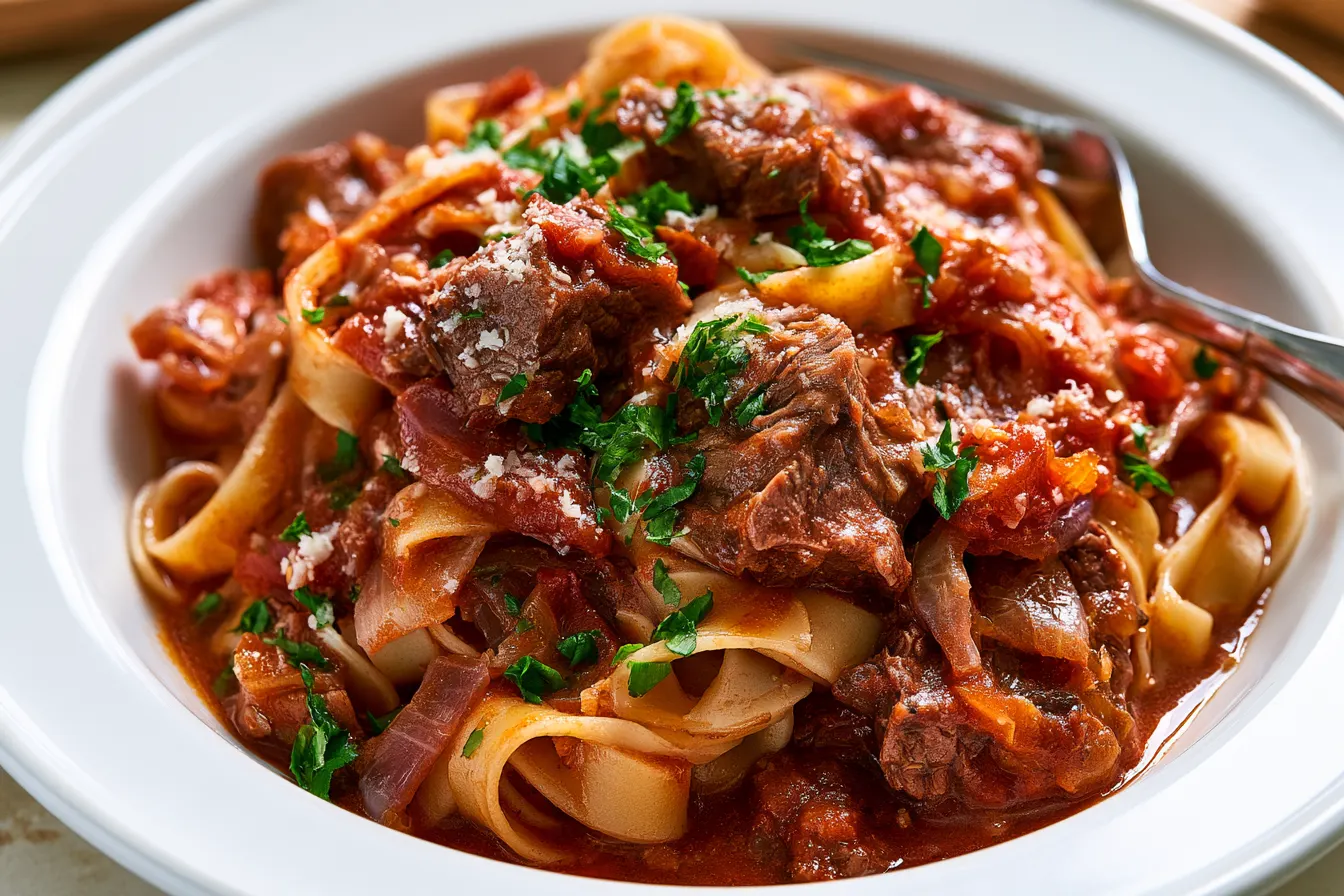
The first time I made this beef ragu pasta I burned the garlic—twice—and yet the sauce still tasted like home. There’s something forgiving about a slow-simmered tomato sauce that lets you recover from small kitchen sins and still end up with something incredible.
- Why this beef ragu pasta works (and why you’ll want to make it)
- Ingredients
- Step-by-step: How to make beef ragu pasta
- Ingredient spotlight and smart swaps
- Make-ahead, meal prep, and freezing
- Serving suggestions and pairings
- Common mistakes and how to avoid them
- FAQ — Quick answers for practical cooks
- Nutrition snapshot (approximate)
- Final thoughts
This recipe leans into texture: a rich, chunky ragu clinging to ribbons of pasta, brightened with a splash of red wine and finished with a snowy rain of Parmigiano. It’s a weeknight winner that behaves like a weekend luxury—minimal fuss, maximal comfort.

Why this beef ragu pasta works (and why you’ll want to make it)
Most ragu recipes aim for velvet-smooth sauces; I prefer a little bite. The beef here is broken down but not pulverized, so you get meaty morsels with each forkful. The tomato base is balanced with a mirepoix (onion, carrot, celery) that melts into the sauce, adding natural sweetness and depth.
There’s also an optional splash of red wine that brightens the savory notes and helps round out the tomatoes. Use it if you have it; the sauce is still lovely without. Think of this as comfort food with logic—ingredients that build flavor over time, not frantic seasoning at the end.

Ingredients
For the beef ragu
- 1 tbsp olive oil
- 2 tbsp unsalted butter
- 1 large onion, finely diced (about 1 1/2 cups)
- 1 large carrot, finely diced (about 1/2 cup)
- 2 celery stalks, finely diced (about 1/2 cup)
- 3 garlic cloves, minced
- 1 lb (450g) ground beef (80/20 or a mix of chuck and brisket)
- 1/2 lb (225g) ground pork (optional — adds silkiness)
- 1 tsp kosher salt, plus more to taste
- 1/2 tsp freshly ground black pepper
- 1/2 cup dry red wine (optional)
- 1 can (28 oz / 800 g) crushed tomatoes
- 1 tbsp tomato paste
- 1 cup low-sodium beef or chicken stock
- 1 bay leaf
- 1/2 tsp dried oregano or a sprig of fresh rosemary
- Pinch of red pepper flakes (optional)
- 1/3 cup whole milk or heavy cream (to finish)
For the pasta and finishing
- 12 oz (340g) pasta (pappardelle, tagliatelle, rigatoni, or spaghetti)
- Salt for pasta water
- 3 tbsp finely grated Parmigiano-Reggiano, plus more for serving
- Fresh basil or flat-leaf parsley for garnish (optional)
- Extra-virgin olive oil for drizzling
Step-by-step: How to make beef ragu pasta
1. Build the flavor base (soffritto)
Heat a large heavy-bottomed pot or Dutch oven over medium heat. Add olive oil and butter until the butter foams. Toss in the diced onion, carrot, and celery.
Sauté gently for 8–10 minutes until the vegetables are soft and starting to caramelize. They should smell sweet and aromatic—this is where much of the sauce’s complexity comes from.
2. Brown the meat
Add the ground beef (and pork, if using) to the pot, breaking it up with a wooden spoon. Season with 1 tsp kosher salt and 1/2 tsp pepper.
Cook for 6–8 minutes until the meat develops brown bits but isn’t completely dry—those browned bits carry deep flavor. Spoon off excess fat if your beef is particularly greasy.
3. Deglaze and add tomatoes
Pour in the red wine to deglaze the pan, scraping up those browned bits. Allow the wine to reduce for 2–3 minutes so the alcohol cooks off.
Stir in the tomato paste and cook briefly to remove any rawness, then add the crushed tomatoes and stock. Add the bay leaf, oregano or rosemary, and red pepper flakes if using.
4. Simmer low and slow
Bring the sauce to a gentle simmer, then reduce heat to low. Cover partially and let it bubble very softly for 45–60 minutes, stirring every 10–15 minutes.
Tip: A long, gentle simmer is the secret here. If the sauce is too vigorous, it can reduce too fast and become overly thick. If it seems thin after an hour, simmer uncovered for a few minutes to concentrate flavors.
5. Finish the ragu
About 10 minutes before you finish, stir in the milk or cream to soften the tomatoes and round the acid. Taste and adjust seasoning with salt and pepper.
Remove the bay leaf and any woody herb stems. The finished ragu should be richly flavored with visible pieces of meat and softened vegetables.

6. Cook the pasta and bring it together
Bring a large pot of water to a rolling boil and salt it generously. Cook the pasta until just shy of al dente—about a minute less than package directions.
Reserve 1 cup of pasta cooking water, drain the pasta, and add it directly to the ragu. Toss over medium heat for 1–2 minutes to allow the pasta to absorb sauce. Add reserved water as needed to loosen the sauce.
Note: Tossing pasta and sauce together in the pan lets starchy water emulsify the sauce so it coats the noodles beautifully.
7. Serve
Plate the pasta, shaving or sprinkling generous Parmigiano on top and finishing with a drizzle of good olive oil and a scatter of fresh herbs. Serve warm with crusty bread to mop up the sauce.
Ingredient spotlight and smart swaps
Ground beef provides hearty flavor, but combining beef and pork gives the ragu a silkier mouthfeel. If you need a leaner option, use all beef and add 1 tbsp olive oil for richness.
Crushed tomatoes give texture; if you prefer a smoother sauce, use passata or blend half the can. The milk or cream at the end is a classic bolognese trick—don’t skip it if you dislike sharp acidic tomato edges.
Make-ahead, meal prep, and freezing
This ragu ages like a champion. Make it a day ahead and the flavors will deepen; reheat gently over low heat with a splash of stock or water.
To freeze: cool completely, portion into airtight containers, and freeze up to 3 months. Thaw in the fridge overnight and rewarm slowly on the stovetop. If the sauce stiffens, stir in a little liquid and heat until glossy again.
Serving suggestions and pairings
- A big green salad with lemon vinaigrette cuts through the richness.
- Polenta or mashed potatoes make excellent bases for a hearty spoonful of ragu.
- For wine: a medium-bodied Sangiovese or Chianti complements tomato acidity and beefy depth.
Common mistakes and how to avoid them
One common error is rushing the browning stage. If the meat isn’t allowed to develop caramelized bits, the sauce will lack depth. Be patient when browning and deglaze thoroughly.
Another misstep is over-salting early. Start with modest salt since the sauce reduces as it simmers. Taste and season again at the end.
FAQ — Quick answers for practical cooks
Can I make this beef ragu in a slow cooker or Instant Pot?
Yes. For a slow cooker, brown the meat and vegetables first, then transfer everything and cook on low for 6–8 hours. For an Instant Pot, use the sauté function for browning, then pressure cook on high for 20–25 minutes followed by a natural release.
What pasta shapes work best with beef ragu?
Wide ribbons like pappardelle, tagliatelle, or even rigatoni are excellent because they catch the chunky sauce. Spaghetti works too—just make sure to toss well so the strands pick up the meat.
How do I adjust the sauce if it’s too acidic?
Stir in a splash of milk or a small knob of butter to round acidity. A pinch of sugar helps too, but use sparingly so the sauce doesn’t taste sweet.
Can I use ground turkey or plant-based meat instead of beef?
You can substitute ground turkey or a plant-based crumble. Expect a slightly different texture and lighter flavor—consider adding a tablespoon of olive oil or unsalted butter for richness.
How long will leftover ragu last in the fridge?
Stored in an airtight container, ragu keeps for 3–4 days. Reheat gently and add a little liquid if needed to bring it back to saucy consistency.
Nutrition snapshot (approximate)
This is a comforting, protein-forward dish. Below are ballpark figures per serving when divided into four portions.
| Calories | Protein | Fat | Carbs |
|---|---|---|---|
| ~640 kcal | 34 g | 28 g | 58 g |
Final thoughts
Beef ragu pasta rewards a little time and attention. It’s forgiving, crowd-pleasing, and perfect for leftovers that taste even better the next day. Let the sauce simmer, set a good soundtrack, and enjoy the way your kitchen fills with warm, tomato-sweet aroma.

Beef Ragu Pasta
Hearty beef ragu simmered with tomatoes and aromatics, served over pasta—comforting, rich, and perfect for weeknights or company.
🛒 Ingredients
👩🍳 Instructions
Make ahead: ragu improves after a day. Freeze in portions up to 3 months. To reheat, thaw overnight and warm gently, adding a splash of stock if needed. Substitute ground turkey or plant-based crumble for a lighter version; add a tablespoon of fat for richness.