


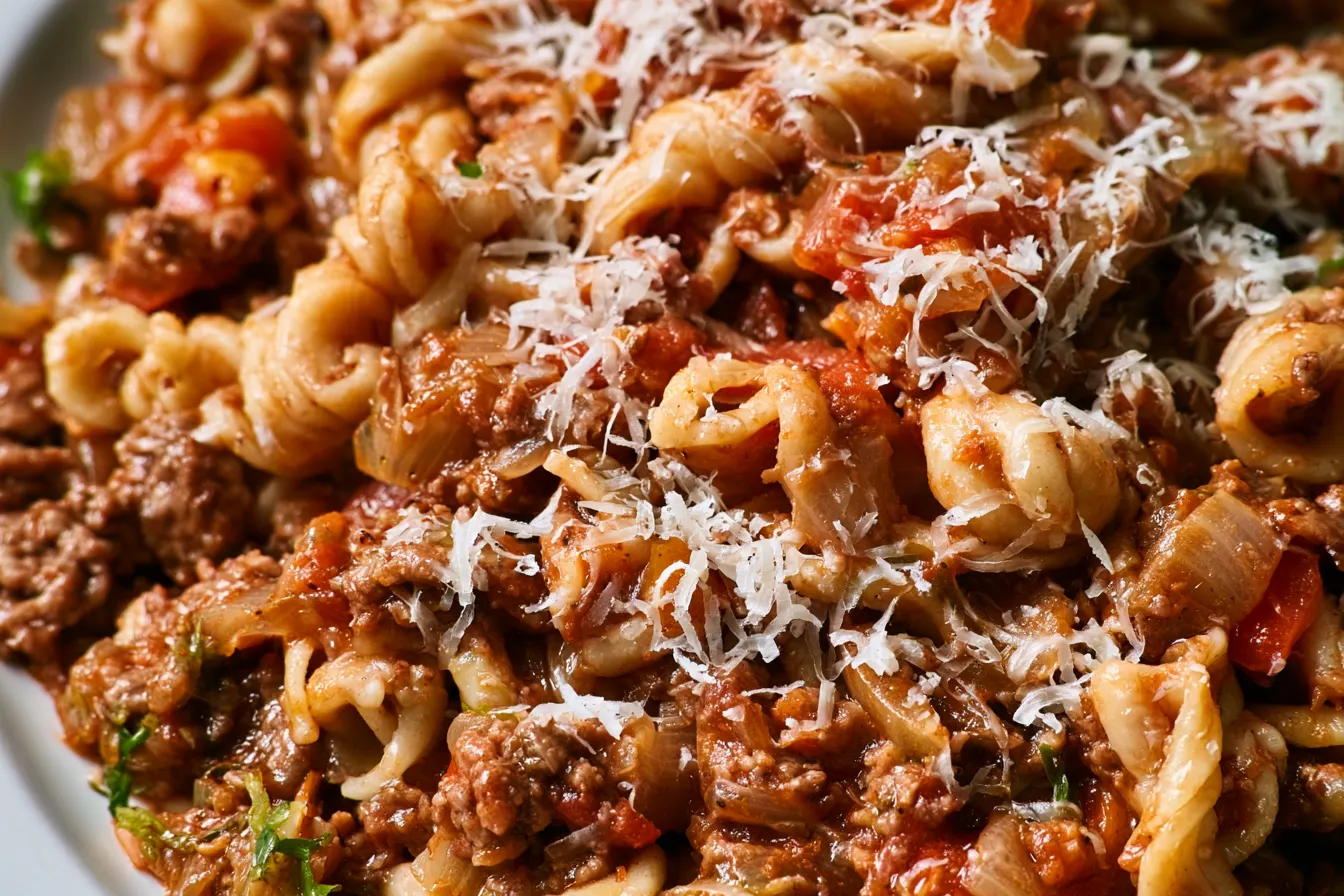
This simple bolognese is the sauce I reach for when I want something comforting but honest — a thick, meaty ragù that smells like the best parts of Sunday lunch.
- Ingredients for simple bolognese
- What makes this simple bolognese different
- Step-by-step: make the simple bolognese
- Ingredient spotlight & smart swaps
- Common mistakes and how to avoid them
- Make-ahead, freezing, and meal prep
- Serving suggestions and pairings
- FAQ
- Variations and flavor twists
- Final notes — why this recipe works
It began as an experiment with different canned tomatoes and a stubborn insistence that I didn’t need to fuss for hours to get deep flavor. The trick? A rich soffritto, good browning, and yes — canned cherry tomatoes that add a natural sweetness without a spoonful of sugar.
Use a sturdy pasta — orecchiette, mezzi rigatoni, nodi marini or wide pappardelle — so each bite carries a bite of sauce and meat. This easy bolognese recipe plays nicely with whatever ground meat you prefer, and it freezes beautifully for lunches later in the week.

Ingredients for simple bolognese
This ingredient list makes about 4 generous servings. I keep the pantry staples simple and let the technique do the heavy lifting.
Sauce
- 2 tbsp extra-virgin olive oil
- 2 tbsp unsalted butter
- 1 medium onion, finely diced (about 1 cup)
- 1 large carrot, finely diced (about 1/2 cup)
- 2 celery stalks, finely diced (about 1/2 cup)
- 3 garlic cloves, smashed and minced
- 1 lb (450 g) ground beef (80/20) — or mix beef and pork
- 4 oz (115 g) pancetta or bacon, finely chopped (optional but lovely)
- 1 cup dry red wine
- 1 x 14-oz can cherry tomatoes, crushed by hand (or a 14-oz can whole cherry tomatoes, lightly crushed)
- 1/2 cup low-sodium beef or chicken stock
- 3 tbsp tomato paste
- 1/2 cup whole milk (or cream for silkier finish)
- 2 bay leaves
- 1 tsp dried oregano or 1 tbsp chopped fresh oregano
- Salt and freshly ground black pepper
- Pinch of red pepper flakes (optional)
- Fresh basil or parsley to finish
Pasta & finishing
- 12–14 oz (350–400 g) pasta (orecchiette, pappardelle, mezzi rigatoni, or your favorite)
- Grated Parmigiano-Reggiano for serving
- Extra-virgin olive oil for drizzling (optional)

What makes this simple bolognese different
There are a dozen ways to do bolognese. I focused on balance: no cloying sweetness, no overly acidic tomato, and a texture that’s chunky and satisfying.
Using canned cherry tomatoes gives a natural, bright sweetness and a flecked texture that mimics the slow-cooked depth of a classic ragù without the hours. The milk at the end softens the acidity and roundes the flavor — an old-school trick from Emilia-Romagna kitchens.
Step-by-step: make the simple bolognese

1. Make the soffritto (build the flavor base)
Heat the olive oil and butter in a heavy-bottomed pan over medium heat. Add the onion, carrot, and celery. Sweat gently — you want them soft and lightly golden, not browned.
Stir occasionally, about 8–10 minutes. The kitchen should smell sweet and inviting; that’s your flavor foundation.
2. Add the pancetta and garlic
Toss in the pancetta (if using) and cook until it starts to render fat, then add the garlic and cook for another minute. The aroma will turn savory and complex.
3. Brown the meat
Increase the heat to medium-high. Add the ground meat in one layer and let it brown without stirring for 2–3 minutes, then break it up and continue until it’s well-browned — those browned bits are where flavor lives.
Tip: Don’t overcrowd the pan. If the meat steams, you lose that caramelized flavor.
4. Deglaze with wine
Pour in the red wine and scrape the bottom of the pan with a wooden spoon to lift all the fond. Let the wine reduce by about half; this concentrates flavor and softens the rawness.
5. Add tomato paste and canned cherry tomatoes
Stir in the tomato paste and cook for a minute to sweeten it, then add the crushed cherry tomatoes and stock. Toss in bay leaves and oregano, season with salt and pepper, and add red pepper flakes if you like a little heat.
6. Simmer low and slow
Reduce heat to a bare simmer. Cover partially and let the sauce bubble gently for 45–60 minutes. Stir every 10–15 minutes to prevent sticking and to judge thickness.
Note: If you want a deeper flavor, simmer up to 2 hours. Add small splashes of stock if it reduces too much.
7. Finish with milk and seasoning
Stir in the milk and simmer for another 10 minutes. Taste and adjust seasoning. The milk should give the sauce a round, velvet finish and tame acidity.
8. Cook the pasta and marry with sauce
Bring a large pot of salted water to a rolling boil. Cook the pasta 1–2 minutes less than package instructions so it finishes cooking in the sauce.
Reserve 1 cup pasta water, drain the pasta, then add it straight to the sauce. Toss over medium heat for a minute or two. Add pasta water as needed to loosen and create a silky coat on the pasta.
9. Serve
Plate with a generous grating of Parmigiano and a few basil leaves. A drizzle of good olive oil finishes the dish beautifully.
Ingredient spotlight & smart swaps
Ground meats: Beef gives classic heft. Mix with pork for extra juiciness. Turkey or chicken will work for a lighter version, but add a bit more fat (butter or olive oil) to keep it from drying.
Canned cherry tomatoes: These are sweeter and hold small chunks that make the sauce feel rustic. If you only have whole canned tomatoes, crush them and it will be fine. Avoid plain passata here unless you want a smoother, more uniform sauce.
Milk: Adds silkiness and calms the tomatoes. You can use whole milk, half-and-half, or a splash of cream if you prefer richer texture.
Common mistakes and how to avoid them
- Rushing the browning: If you stir too much, you won’t get the fond. Let meat sit and brown in patches.
- Too much salt at the start: Tomatoes concentrate as they reduce; season gradually and correct at the end.
- Skipping the wine: Alcohol cooks off but adds depth; swap with extra stock if you must, but wine is recommended.
Make-ahead, freezing, and meal prep
This bolognese is a terrific make-ahead. Cool completely, portion into airtight containers, and freeze up to 3 months. Thaw overnight in the fridge and reheat gently on the stove with a splash of water or stock to loosen.
For meal prep, pair with cooked pasta in lunch containers (keep sauce separate until reheating to avoid mushy pasta).
Serving suggestions and pairings
Serve with a simple green salad dressed with lemon and olive oil to cut the richness. A rustic loaf or garlic bread is always welcome.
Wine pairing: medium-bodied Sangiovese or Chianti complements the acidity and tomato notes. For non-alcoholic, sparkling water with a lemon wedge refreshes the palate.
FAQ
Can I make simple bolognese without wine?
Yes. Replace the wine with the same amount of stock and a splash of balsamic or red wine vinegar for acidity. The depth will be slightly different but still delicious.
Why do you add milk to bolognese?
Milk softens the tomato’s acidity and gives the sauce a silkier mouthfeel. It’s a traditional addition in many Emilia-Romagna recipes and helps meld flavors.
Is canned cherry tomatoes necessary?
They aren’t mandatory, but they lend a sweet brightness and small, pleasant chunks to the sauce. Whole canned tomatoes crushed by hand are the next best option.
What pasta shapes work best with this bolognese?
Hearty shapes that catch sauce are ideal: orecchiette, mezzi rigatoni, nodi marini, or wide pappardelle if you prefer long ribbons. Spaghetti works too but the sauce clings best to ridged or cupped shapes.
How long can leftovers keep in the fridge?
Stored in an airtight container, refrigerated bolognese stays good for 3–4 days. Reheat gently on the stove with a splash of water to rehydrate the sauce.
Variations and flavor twists
For a richer, slightly smoky profile, swap pancetta for chopped guanciale. Add mushrooms for an earthy note. For a spicy kick, fold in a spoonful of nduja near the end.
Vegetarian version: Use lentils and finely chopped mushrooms to mimic the texture; cook the soffritto and add cooked brown or green lentils with crushed tomatoes.
Final notes — why this recipe works
This simple bolognese leans on technique rather than a long list of ingredients. Brown well, simmer patiently, and finish with milk. The canned cherry tomatoes are the ace up my sleeve — they bring balance and sweetness without masking the savory meatiness.
It’s comforting, forgiving, and the kind of sauce that makes the whole kitchen smell like home.

Simple Bolognese
A rich, easy bolognese made with browned meat, canned cherry tomatoes, and finished with milk for a silky, comforting sauce.
🛒 Ingredients
👩🍳 Instructions
Make-ahead: cool and refrigerate up to 4 days or freeze up to 3 months. Reheat gently with a splash of stock. Swap meats: mix beef and pork for juicier texture. Use canned whole tomatoes if cherry tomatoes aren't available.