


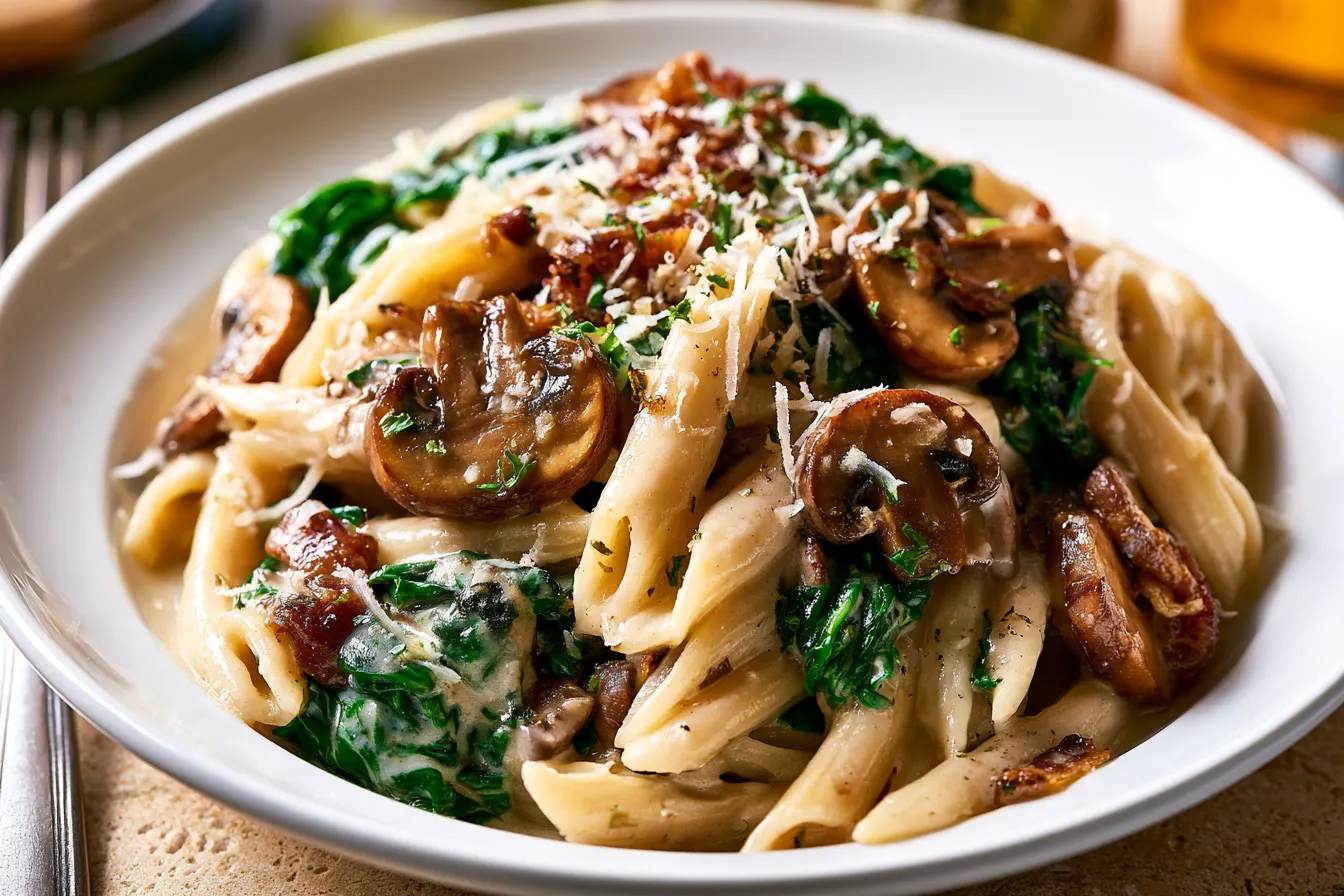
The first time I made this Parmesan Spinach Mushroom Pasta I almost forgot to set the table — the whole kitchen smelled like butter, garlic, and warm Parmesan that pulled everyone toward the stove.
- Why this Parmesan Spinach Mushroom Pasta works
- Ingredients
- Ingredient notes & substitutions
- Step-by-step: how to make Parmesan Spinach Mushroom Pasta
- What makes this version different
- Common mistakes and how to avoid them
- Variations and flavor twists
- Make-ahead, storage, and reheating
- Serving suggestions and pairings
- FAQ
- Final thoughts
There’s something very comforting about sautéed mushrooms hitting the pan and the mild heat prompting the spinach to wilt into a glossy, green ribbon. This version keeps things simple: no heavy cream, just good olive oil, a splash of pasta water, and freshly grated Parmesan to bind everything into a silky sauce.

Whether you need a weeknight vegetarian dinner, a meatless main for guests, or a quick dish to bring to potluck, this recipe balances savory mushrooms and bright spinach with the nutty warmth of Parmesan. It’s forgiving, fast, and incredibly satisfying.
Why this Parmesan Spinach Mushroom Pasta works
Some pasta recipes rely on cream for richness. Here I use starchy pasta water plus lots of grated Parmesan so you get a silky mouthfeel without anything cloying. That approach keeps the dish lighter and lets the earthiness of mushrooms and the freshness of spinach sing.
The mushrooms are browned until they have a deeply caramelized edge; that browning — the Maillard reaction — is where most of the flavor lives. When you add garlic and a splash of white wine (optional) the aromatics release and marry to create a rustic, restaurant-style sauce you can make any night.
Ingredients

Make sure to read the ingredient notes and possible swaps below before you start; small choices here change the end result in delightful ways.
Main ingredients
- 12 oz (340 g) spaghetti or your favorite long pasta
- 2 tbsp olive oil
- 2 tbsp unsalted butter
- 12 oz (340 g) cremini or baby bella mushrooms, thinly sliced
- 4 cloves garlic, thinly sliced or minced
- 5 oz (140 g) baby spinach (or 6–7 cups loosely packed)
- 1/2 cup finely grated Parmesan cheese, plus extra for serving
- 1/2 cup reserved pasta cooking water (more if needed)
- Salt and freshly ground black pepper to taste
- 1/4 tsp red pepper flakes (optional)
- 1 tsp lemon zest (optional, brightens the dish)
- 2 tbsp dry white wine or vegetable broth (optional)
Optional garnish and finishes
- Fresh parsley, chopped
- Toasted pine nuts or walnuts
- Extra-virgin olive oil drizzle
Ingredient notes & substitutions
If you only have button mushrooms, they’ll work — the key is to avoid overcrowding the pan so they brown nicely. For a dairy-free version use nutritional yeast and a tablespoon of tahini instead of Parmesan.
Want a gluten-free plate? Swap the spaghetti for a gluten-free pasta of similar shape and follow the package instructions for timing. Use vegetable broth in place of white wine if you prefer to skip alcohol.
Step-by-step: how to make Parmesan Spinach Mushroom Pasta

Break the method into clear stages: cook pasta, brown mushrooms, build the sauce, toss and finish. Each stage has small tricks that make the end dish better than the sum of its parts.
1. Cook the pasta
Bring a large pot of water to a vigorous boil and salt it generously — it should taste like the sea. Add the spaghetti and cook until just shy of al dente, about 1–2 minutes less than package directions.
Reserve 1 to 1 1/2 cups of the starchy cooking water, then drain the pasta. You’ll add back a smaller amount later (about 1/2 cup) to make the sauce glossy and help the Parmesan melt evenly.
2. Brown the mushrooms
While the pasta cooks, heat a large skillet over medium-high heat. Add olive oil and 1 tablespoon butter. When the fat shimmers and the pan is hot, add the sliced mushrooms in a single layer.
Let them sit without stirring for 2–3 minutes to develop a golden crust; then stir and continue cooking until they’re deeply browned and most of their liquid has evaporated, about 6–8 minutes total.
Tip: If the mushrooms steam instead of browning, the pan isn’t hot enough or there are too many mushrooms. Brown in batches if necessary.
3. Aromatics and de-glazing
Reduce heat to medium, push mushrooms to the side and add remaining butter. Add garlic and red pepper flakes, cook 30–45 seconds until fragrant but not browned.
Pour in wine or broth to deglaze the pan, scraping up brown bits. Let the liquid bubble and reduce for 1–2 minutes; this concentrates flavor and lifts the pan fond into your sauce.
4. Add the spinach and build the sauce
Stir in spinach a handful at a time. It will look like a lot at first but wilts quickly. Once the spinach is wilted, add the drained pasta and 1/2 cup reserved pasta water.
Turn the heat to low and sprinkle in the grated Parmesan. Toss vigorously so the cheese and starchy water emulsify into a cohesive, silky sauce that coats the pasta.
Note: If the sauce seems dry, add more reserved pasta water a tablespoon at a time. You want glossy pasta that clings to the strands, not a separate pool of liquid on the plate.
5. Finish and serve
Taste and season with salt, pepper, and lemon zest if using. Divide into bowls and finish with an extra shaving of Parmesan and a drizzle of good olive oil. Serve while hot — the texture is best right away.
What makes this version different
Many recipes call for cream to achieve a silky finish. This one relies on technique: high heat for mushroom browning, a measured amount of pasta water, and freshly grated Parmesan. The result is lighter, less cloying, and lets the mushroom flavor stay front and center.
Also, thinly sliced garlic — not pulverized — gives bursts of flavor without overwhelming the palate, and the optional splash of white wine adds a subtle acidity that rounds the dish.
Common mistakes and how to avoid them
- Overcrowding the mushrooms: causes steaming instead of browning. Cook in batches if needed.
- Using pre-grated Parmesan from a can: it doesn’t melt the same way. Freshly grated is essential for a creamy sauce.
- Skipping reserved pasta water: you’ll miss the glue that makes the sauce cling to pasta.
- Adding too much water at once: the sauce will be thin. Add small amounts until you reach the right texture.
Variations and flavor twists
If you want a richer dish, stir in a tablespoon of mascarpone or a splash of cream at the end. For a smoky version, toss in a few slices of roasted red pepper or finish with smoked paprika.
To add protein, fold in cooked chickpeas for a vegetarian boost or top with pan-seared chicken breasts. For a vegan take, use vegan Parmesan and a little nutritional yeast plus a touch of olive oil to emulate creaminess.
Make-ahead, storage, and reheating
Store leftovers in an airtight container in the fridge for up to 3 days. The sauce firms up as it cools because Parmesan tightens; add a splash of water or broth when reheating to loosen it.
Reheat gently over low heat in a skillet, stirring often, or microwave in short bursts, stirring between each, until warmed through. Freshen with a squeeze of lemon and an extra drizzle of olive oil before serving.
Serving suggestions and pairings
This pasta pairs beautifully with a crisp green salad (think arugula with lemon vinaigrette) to cut the richness. A simple roasted vegetable, like asparagus or cherry tomatoes, adds brightness.
For wine, a light-bodied white like Pinot Grigio or a unoaked Chardonnay complements the mushrooms without overpowering them. If you prefer red, a chilled Beaujolais is a versatile match.
FAQ
Can I use another type of pasta besides spaghetti?
Absolutely. Bucatini, linguine, or penne all work well. Short shapes like penne or rigatoni will hold bits of mushroom and spinach differently, which is a nice variation.
How do I keep the mushrooms from getting soggy?
Start with a hot pan and don’t stir too frequently. Give the mushrooms a few minutes to brown before moving them around. Also avoid overloading the pan — brown in batches if necessary.
Is fresh Parmesan really necessary?
Yes. Freshly grated Parmesan contains moisture and fat that melts smoothly and creates the emulsion with pasta water. Pre-grated or powdery Parmesan often contains anti-caking agents and won’t produce the same silky texture.
Can I make this gluten-free or dairy-free?
Use gluten-free pasta to make it gluten-free. For dairy-free, substitute nutritional yeast and a tablespoon of tahini or vegan Parmesan to mimic the nutty flavor. The texture will be slightly different but still tasty.
What’s the best way to add brightness to the dish?
A little lemon zest or a quick squeeze of lemon juice just before serving lifts the whole plate. Fresh herbs like parsley or basil also add a lively finish.
Final thoughts
This Parmesan Spinach Mushroom Pasta is one of those dinners that feels thoughtful without being fussy. It’s rooted in good technique rather than heavy ingredients, and it rewards a little patience at the stove — especially when you take the time to coax color out of the mushrooms.
Serve it for a cozy weeknight or bring it to a shared meal; it travels well and stays vibrant with just a touch of reheating love. When you make it, notice the way the Parmesan binds everything together: that quiet alchemy is what sells this dish.

Parmesan Spinach Mushroom Pasta
A quick, creamless pasta with browned mushrooms, tender spinach, and silky Parmesan sauce—perfect for weeknights and meatless dinners.
🛒 Ingredients
👩🍳 Instructions
Use freshly grated Parmesan for the best texture. If mushrooms steam instead of brown, cook them in batches. Store leftovers in an airtight container for up to 3 days; reheat gently with a splash of water or broth to loosen the sauce.