

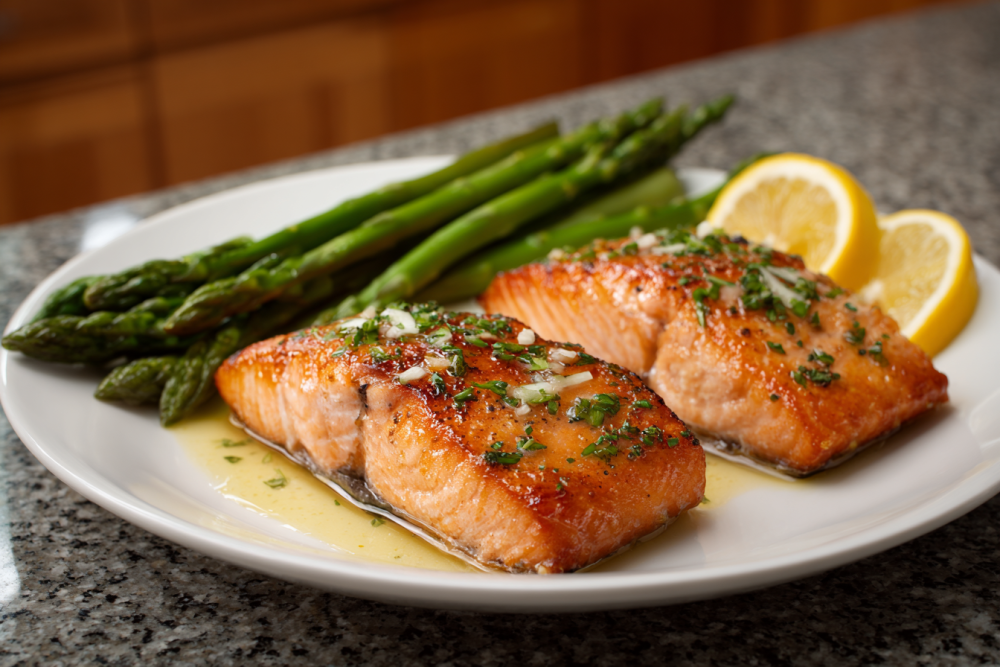
I once thought salmon was only for fancy occasions, reserved for restaurants with white tablecloths and hushed tones. My kitchen, usually a symphony of sizzling pans and clanking pots, felt too boisterous for such an elegant fish. That was until a particularly chaotic Tuesday evening when I had two beautiful salmon fillets, a forgotten bunch of asparagus, and a desperate need for something quick, healthy, and utterly delicious. What emerged from that culinary scramble was this incredibly simple, yet profoundly satisfying, garlic lemon butter salmon. It proved that sometimes the most impressive meals come from the humblest beginnings and the fastest preparations.
- The Heart of the Dish: Perfectly Cooked Salmon
- Gathering Your Goodies: What You’ll Need
- Crafting Your Meal: Step-by-Step Goodness
- Prep Your Produce and Oven
- Season the Salmon
- Sear for Success
- Build the Butter Sauce
- Roast to Perfection
- Finishing Touches
- Common Questions About This Salmon Dish
- Why is my salmon sometimes dry?
- Can I make this recipe without an oven?
- What if I don’t have fresh asparagus?
- Can I prepare the sauce ahead of time?
- What can I serve with this garlic lemon butter salmon?
- Beyond the Plate: Tips for Meal Prep and Storage
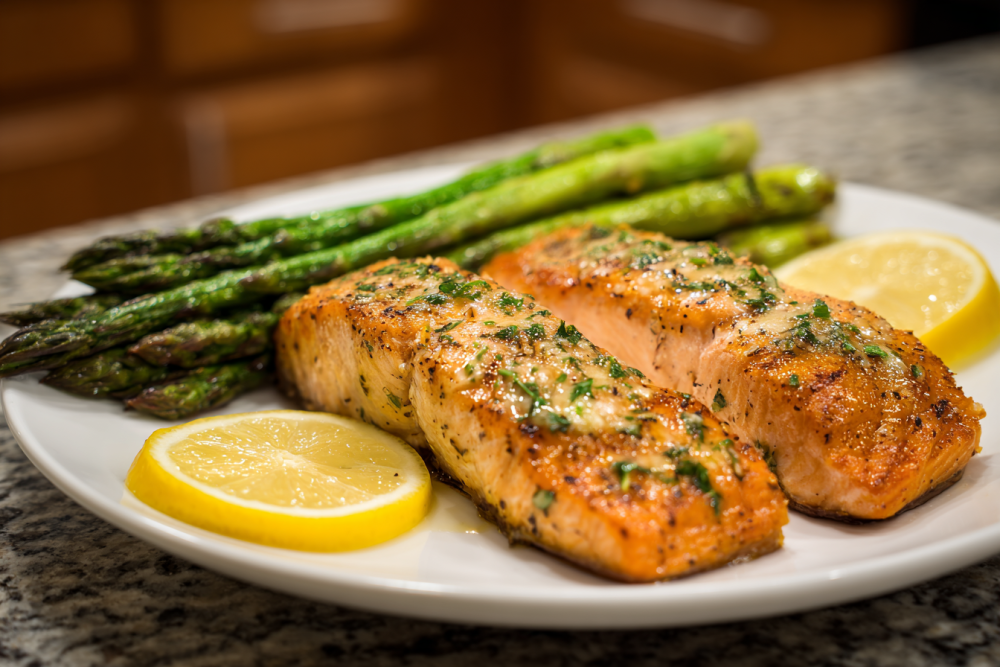
The Heart of the Dish: Perfectly Cooked Salmon
When it comes to cooking fish, many people get intimidated. There’s a fear of drying it out or ending up with something rubbery. But salmon, especially, is quite forgiving. The key is to start with high-quality fillets and pay attention to basic cooking principles. For this recipe, we’re aiming for that beautiful flaky texture that melts in your mouth, enveloped in a fragrant garlic lemon butter sauce.Selecting Your Salmon Fillets
Choosing the right salmon makes all the difference. Look for fillets that are vibrant in color, whether it’s a deep orange-red for sockeye or a paler pink for Atlantic. The flesh should look firm and moist, not slimy or dull. Avoid any pieces with brown spots or a strong, fishy odor. Fresh salmon should smell clean, like the ocean. Wild-caught salmon often has a richer flavor profile and leaner texture, while farmed salmon tends to be fattier and milder. Either will work beautifully here, so pick what you prefer and what’s available.Why This Preparation Shines
This method of cooking salmon, combining a quick sear with a short finish in the oven (or even just on the stovetop if your fillets are thin), ensures a perfectly cooked interior and a lovely crust. The garlic lemon butter sauce isn’t just drizzled on top; it’s infused into the fish as it cooks, keeping it moist and imparting incredible flavor. This means every bite is succulent, savory, and bright. It’s hard to beat that combination for a healthy, satisfying meal.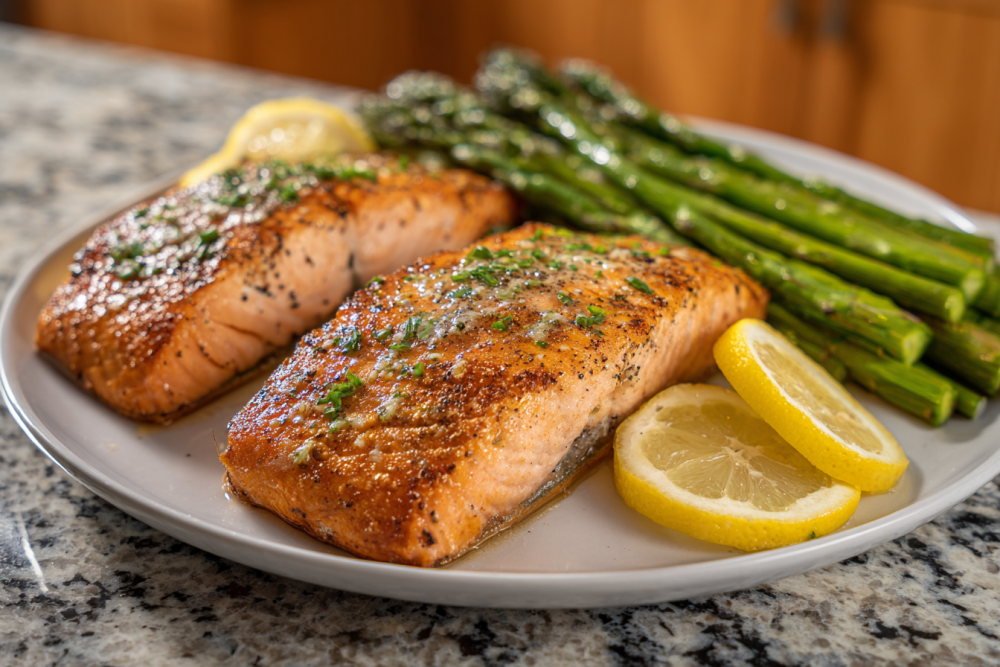
Gathering Your Goodies: What You’ll Need
This recipe truly champions fresh, vibrant ingredients. You’ll be amazed at how much flavor you can extract from such a short list. Less is genuinely more when your foundational components are this good.For the Garlic Lemon Butter Salmon
- Salmon Fillets: Two 6-ounce fillets, skin on or off – your preference. Skin-on helps keep the fish moist and crispy!
- Asparagus Spears: About 1 pound, trimmed. Look for bright green, firm spears with tight tips.
- Unsalted Butter: A few tablespoons. This is where a lot of the richness and flavor comes from.
- Garlic: Freshly minced, always! About 3-4 cloves, more if you’re a garlic fiend like me.
- Lemon: One whole lemon – you’ll use both the zest and the juice.
- Olive Oil: A good quality extra virgin olive oil for roasting and searing.
- Fresh Parsley: Chopped, for a burst of color and herbaceousness at the end.
- Salt and Black Pepper: Essential for seasoning to taste.
Flavor Enhancers (Optional, but Recommended!)
- Red Pepper Flakes: Just a pinch for a subtle warmth and kick.
- Dry White Wine: A splash (about 2 tablespoons) can add another layer of acidity and depth to the sauce.
- Dill: Fresh dill pairs wonderfully with salmon and lemon.
Crafting Your Meal: Step-by-Step Goodness
This recipe moves pretty quickly, so it’s a good idea to have all your ingredients prepped and ready to go before you even turn on the stove. This is what chefs call “mise en place,” and it makes cooking a breeze.Prep Your Produce and Oven
First things first, preheat your oven to 400°F (200°C). This allows it to get to temperature while you’re prepping. Wash your asparagus thoroughly and snap off the tough, woody ends. A good trick is to hold a spear by both ends and bend it; it will naturally break where the tough part meets the tender part. Toss the trimmed asparagus with a drizzle of olive oil, a sprinkle of salt, and a grind of fresh black pepper on a baking sheet. Set aside.Season the Salmon
Pat your salmon fillets dry with paper towels. This is a crucial step for achieving that beautiful crispy skin if you’re leaving it on, and it helps create a better sear regardless. Season both sides generously with salt and black pepper. Don’t be shy here; proper seasoning enhances the natural flavors of the fish. You can also lightly sprinkle with a little garlic powder if you want an extra layer of garlic flavor.Sear for Success
Heat an oven-safe skillet (cast iron or stainless steel works best) over medium-high heat. Add a tablespoon of olive oil. Once hot, carefully place the salmon fillets, skin-side down (if applicable), into the skillet. Sear for about 3-4 minutes until the skin is golden and crispy, or until the flesh side is golden brown.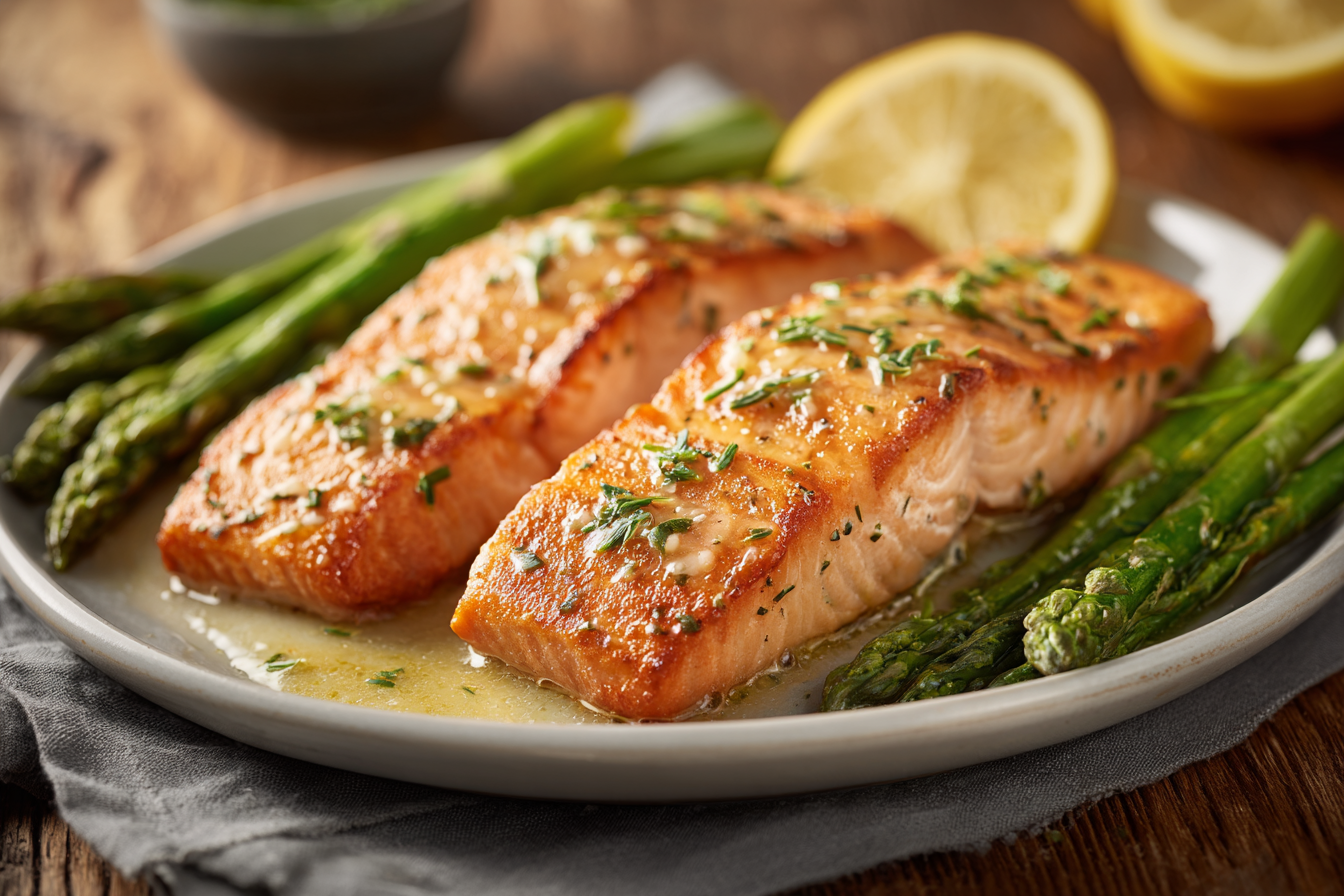
Build the Butter Sauce
Flip the salmon fillets. Reduce the heat to medium. Add the butter to the pan, allowing it to melt. Once melted, toss in the minced garlic and cook for about 30 seconds until fragrant, being careful not to burn it. Pour in the fresh lemon juice and add the lemon zest. If you’re using white wine or red pepper flakes, add them now. Spoon the fragrant garlic lemon butter sauce over the salmon fillets.Roast to Perfection
Now, transfer your skillet with the salmon to the preheated oven. Place the baking sheet with the seasoned asparagus in the oven alongside the salmon. Roast for 8-12 minutes, depending on the thickness of your salmon and your desired doneness. The salmon is cooked when it easily flakes with a fork. The asparagus should be tender-crisp and slightly charred in places.Tip: For perfectly flaky salmon, aim for an internal temperature of 145°F (63°C). Use an instant-read thermometer inserted into the thickest part of the fillet.
Finishing Touches
Once cooked, remove both the salmon and asparagus from the oven. Transfer the salmon to serving plates. Drizzle any remaining garlic lemon butter sauce from the pan over the salmon and asparagus. Garnish generously with fresh chopped parsley. A final squeeze of fresh lemon juice just before serving brightens everything up even further.Common Questions About This Salmon Dish
Even though this recipe is straightforward, a few questions often pop up. Let’s tackle them so you can cook with confidence!Why is my salmon sometimes dry?
Overcooking is the most common culprit for dry salmon. Salmon cooks quickly, so keep a close eye on it. As soon as it flakes easily with a fork, it’s done. Starting with a good sear and then finishing in the oven (or gently on the stovetop) helps cook it evenly without drying out.
Can I make this recipe without an oven?
Absolutely! If your salmon fillets are on the thinner side (around 1-inch thick), you can cook them entirely on the stovetop. Sear skin-side down for 4-5 minutes, flip, add the butter, garlic, and lemon, and cook for another 3-5 minutes, basting with the sauce, until cooked through. You can cook the asparagus in the same pan with the salmon, or in a separate pan.
What if I don’t have fresh asparagus?
While fresh asparagus is ideal, you can certainly use frozen. Thaw it completely and pat it very dry before tossing with olive oil, salt, and pepper. The cooking time might be slightly shorter as it’s already partially blanched. Other green vegetables like green beans, broccoli florets, or even bell peppers would also be delicious roasted alongside the salmon.
Can I prepare the sauce ahead of time?
You can mince the garlic and zest the lemon ahead of time, which speeds things up dramatically. However, I recommend making the lemon butter sauce right before or during the salmon’s cooking to ensure maximum freshness and flavor. Melting the butter and adding the lemon just before serving keeps it vibrant.
What can I serve with this garlic lemon butter salmon?
Beyond the roasted asparagus, this salmon pairs wonderfully with a variety of sides. Consider a simple rice pilaf, quinoa, roasted baby potatoes, or a light green salad with a vinaigrette.
Beyond the Plate: Tips for Meal Prep and Storage
This garlic lemon butter salmon is fantastic fresh, but it also holds up surprisingly well for meal prep, making it a great option for healthy lunches throughout the week.Meal Prepping Made Easy
If you’re planning to meal prep, cook the salmon and asparagus as directed. Once cooled completely, portion them into airtight containers. This recipe is excellent for packing in lunchboxes with a side of brown rice or a fresh green salad. Reheat gently in the microwave or oven for best results.Storing Leftovers
Cooked salmon can be stored in an airtight container in the refrigerator for up to 3 days. While it’s best enjoyed fresh, it makes for delicious cold salads or flakes beautifully into wraps the next day. Reheat gently to prevent it from drying out; a short burst in the microwave or a few minutes in a low oven is usually sufficient. Avoid very high heat, which can make the salmon tough.Flavor Twists to Try
Feel free to get creative with the flavors! A sprinkle of smoked paprika can add a lovely depth, or a touch of fresh thyme sprigs alongside the garlic. For a spicier kick, increase the red pepper flakes or add a dash of cayenne. You could also try a touch of honey or maple syrup in the butter sauce for a hint of sweetness that balances the lemon beautifully. The beauty of a simple base recipe like this is its adaptability.
Flaky Garlic Lemon Butter Salmon with Roasted Asparagus
Indulge in a healthy, quick, and flavorful garlic lemon butter salmon with tender roasted asparagus. Perfect for weeknights!
📝 Ingredients
👩🍳 Instructions
-
1Preheat your oven to 400°F (200°C).
-
2On a baking sheet, toss the trimmed asparagus with 1 tablespoon of olive oil, salt, and pepper. Set aside.
-
3Pat the salmon fillets dry with paper towels. Season generously on both sides with salt and pepper.
-
4Heat an oven-safe skillet (cast iron or stainless steel recommended) over medium-high heat. Add the remaining 1 tablespoon of olive oil.
-
5Once the oil is shimmering, carefully place the salmon fillets into the skillet, skin-side down if applicable. Sear for 3-4 minutes until the skin is golden and crispy, or the flesh side is golden brown.
-
6Flip the salmon fillets. Reduce the heat to medium. Add the butter to the pan, allowing it to melt. Stir in the minced garlic and cook for about 30 seconds until fragrant, being careful not to burn it.
-
7Pour in the fresh lemon juice, add the lemon zest, and red pepper flakes (if using). Spoon the garlic lemon butter sauce over the salmon fillets.
-
8Transfer the skillet with the salmon to the preheated oven. Place the baking sheet with the asparagus in the oven alongside the salmon.
-
9Roast for 8-12 minutes, or until the salmon flakes easily with a fork and the asparagus is tender-crisp. (Internal temperature for salmon should be 145°F / 63°C).
-
10Remove from the oven. Transfer salmon and asparagus to serving plates. Drizzle any remaining sauce from the pan over the dish. Garnish with fresh chopped parsley and an optional squeeze of fresh lemon juice.
-
11Serve immediately and enjoy!
💡 Notes
For best results, use fresh, good quality salmon and asparagus. Patting the salmon dry before searing is key for crispy skin. This dish pairs wonderfully with rice, quinoa, or roasted potatoes. Leftovers can be stored in an airtight container in the refrigerator for up to 3 days.