


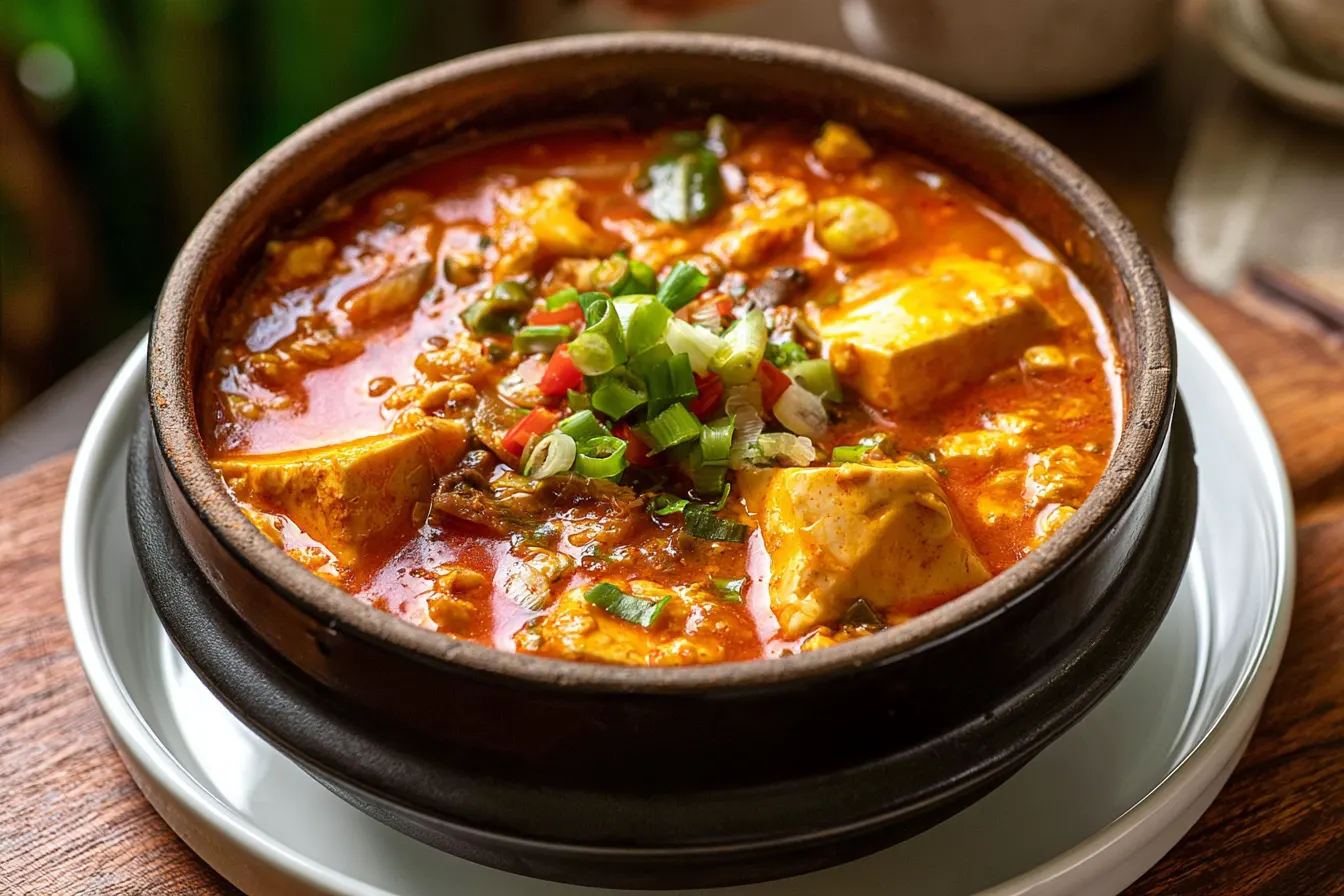
I first learned how to make Soondubu Jjigae on a rainy evening in Seoul, standing over a tiny gas stove at a friend’s kitchen table — the pot hissed, steam fogged my glasses, and that spicy, sea-salty aroma felt like a hug.
- What this version is about (and why it’s simple)
- Ingredients for Soondubu Jjigae
- How to cook Soondubu Jjigae — step by step
- Why this Soondubu Jjigae works
- Ingredient spotlight and smart swaps
- Common mistakes and how to avoid them
- Serving ideas and pairings
- Variations and flavor twists
- Make-ahead, storage, and reheating
- Nutrition snapshot
- FAQ — quick answers to common questions
- Final notes — small rituals that make it feel special
This soft tofu stew is the kind of food that warms your hands and clears the cobwebs from your head. With silken tofu that melts on the tongue, savory broth, and just enough heat from gochugaru, this easy Soondubu Jjigae comes together in under 20 minutes using straightforward ingredients.

What this version is about (and why it’s simple)
I wanted a recipe that feels authentic but doesn’t demand specialty trips to multiple markets. That meant using an anchovy-kelp quick stock or a light store-bought broth, soft tofu straight from the tub, and a flexible protein choice. The result? A fast, comforting Soondubu Jjigae that still tastes like it came from a small Korean restaurant.

Ingredients for Soondubu Jjigae
Measure things out first — the cooking moves quickly once the stew starts simmering. Below are the ingredients for a classic, flexible version that serves 2–3 people.
Main ingredients
- 1 (12–14 oz / 340–400 g) tub soft (silken) tofu (soondubu / sundubu)
- 3/4 cup anchovy-kelp stock or low-sodium vegetable broth
- 1–2 tsp gochugaru (Korean red pepper flakes), adjust to taste
- 1 tbsp gochujang (optional, for depth and color)
- 1 tbsp soy sauce (or tamari for gluten-free)
- 1 tsp sesame oil
- 2 cloves garlic, finely minced
- 1/2 small onion, thinly sliced
- 2 scallions, sliced (white and green parts separated)
- 1/2 cup mushrooms (shiitake or oyster), sliced
- 1 egg (optional)
- Protein option (choose one): 2–3 oz pork belly or shoulder, thinly sliced; or 3–4 small shrimp; or 1/2 cup kimchi for a kimchi soondubu
Quick pantry variations
- Vegetarian: swap anchovy stock for vegetable broth and skip any fish sauce.
- Spicy-sour: add 1–2 tbsp kimchi juice and 2 tbsp chopped kimchi.
- Milder: reduce gochugaru to 1/2 tsp and omit gochujang.
How to cook Soondubu Jjigae — step by step
I’ll walk you through the sequence so you can build flavor intentionally. Keep the tofu whole in its tub until the end to avoid breaking it up while stirring.

Step 1 — Make the quick stock and base
Place a small pot or a heavy-bottomed shallow casserole over medium heat. Add 1 tbsp neutral oil and the white parts of the scallions and sliced onion. Sauté for 1–2 minutes until fragrant and translucent.
Add the minced garlic and stir for 20–30 seconds, careful not to burn it. Sprinkle in gochugaru and stir; it will bloom in the oil and release a toasty, peppery aroma.
Step 2 — Add proteins and mushrooms
If you’re using pork or shrimp, add it now and sear briefly until just cooked through — pork should lose its pink color and shrimp should turn opaque. Toss in mushrooms and cook until they soften.
Note: If using kimchi, add it in this step so it has time to caramelize slightly and contribute acid.
Step 3 — Pour the broth and season
Pour in the anchovy-kelp stock or vegetable broth, then add soy sauce and gochujang (if using). Bring to a gentle simmer. You should smell a savory, slightly sweet broth that hints at the sea from the anchovy stock.
Step 4 — Add the tofu carefully
Use a spoon to scoop the soft tofu directly into the pot in large chunks — you want velvety pockets, not a sandy mash. Let the stew simmer for 3–4 minutes so the tofu warms through and absorbs flavor.
Step 5 — Finish and serve
Crack an egg into the center if you like — it will poach in the hot broth and give richness. Drizzle sesame oil over the top and scatter the green parts of the scallions. Serve immediately in individual bowls with steamed rice on the side.
Tip: If the stew tastes flat, a splash of fish sauce or a pinch of salt will brighten it. If it’s too salty, a squeeze of lime or a small grated apple into the broth can help balance the flavors.
Why this Soondubu Jjigae works
There are a few little habits I follow that make this version reliably good: bloom the chili in oil for deeper heat, add tofu late to preserve texture, and balance the savory anchovy notes with a touch of sweetness or acid if needed. These small moves give you restaurant-level depth without extra fuss.
Ingredient spotlight and smart swaps
Soft (silken) tofu vs. firm tofu
Soft tofu is the star — it melts into custardy ribbons that are essential to soondubu. Firm tofu will still taste fine but gives a firmer bite and changes the experience.
Gochugaru and gochujang
Gochugaru provides smoky heat and a bright red color; gochujang adds umami and a touch of sweetness. Use them according to your heat tolerance. If you only have chili flakes, reduce the amount and add 1/2 tsp sugar to mimic gochujang’s sweetness.
Broth base choices
Anchovy-kelp stock is traditional and gives the stew a savory backbone. Vegetable stock keeps things vegetarian. Canned clam juice is another option if you like a brinier finish.
Common mistakes and how to avoid them
- Over-stirring the tofu: Handle gently; stir only to combine. This preserves the silky texture.
- Too much salt early: Reduce soy sauce while simmering and adjust after tofu is added.
- Burning the garlic or chili: Cook aromatics on moderate heat and watch closely — burnt spices taste bitter.
- Cooking the egg too long: Add the egg at the last 30–60 seconds for a runny yolk; longer for fully set.
Serving ideas and pairings
Soondubu is classically served with a bowl of short-grain rice and a few banchan (Korean side dishes). Here are a few pairing ideas:
- Steamed rice — helps mellow the heat and soak up broth.
- Kimchi — if your stew isn’t already kimchi-based, a small plate of kimchi offers bright acidity.
- Simple cucumber salad dressed in rice vinegar — cooling counterpoint to the spice.
- Grilled mackerel or pan-fried tofu for extra protein on the table.
Variations and flavor twists
Seafood Soondubu
Use shrimp, clams, and a little fish sauce for a briny, ocean-forward stew. Add shellfish early enough to cook through but not so long they toughen.
Kimchi Soondubu
Stir in 1/2 cup chopped kimchi and a splash of kimchi juice; this gives a tangy, fermented lift that plays wonderfully with tofu.
Vegetarian/vegan
Use vegetable stock, tamari instead of soy sauce, and skip the egg. Add a handful of firm beans like edamame for protein if desired.
Make-ahead, storage, and reheating
Store leftover stew in an airtight container in the refrigerator for up to 3 days. The tofu will absorb more liquid as it sits, so the texture changes — still delicious but denser.
To reheat: warm gently on the stovetop over low heat. Add a splash of water or broth to loosen the texture. If you want a freshly runny egg, crack an egg into each serving bowl before pouring hot stew over it so the heat finishes the egg right before eating.
Nutrition snapshot
The nutrition will vary by protein choice and whether you add an egg. This is a relatively low-calorie, protein-forward soup when made with seafood or tofu and served with rice on the side.
| Nutrient | Per serving (approx.) |
|---|---|
| Calories | 320 kcal |
| Protein | 22 g |
| Fat | 14 g |
| Carbohydrates | 22 g |
| Sodium | 760 mg |
FAQ — quick answers to common questions
Can I use firm tofu instead of soft tofu?
Yes. Firm tofu works, but soft (silken) tofu is traditional and gives the stew its signature texture. If using firm, cut into cubes and add slightly earlier so it heats through.
What’s the difference between Soondubu Jjigae and Kimchi Jjigae?
Soondubu Jjigae centers on silken tofu and a lighter broth (often with anchovy-kelp stock), while Kimchi Jjigae is driven by aged kimchi and is more sour and robust. You can combine elements of both for a kimchi-soondubu hybrid.
How spicy is Soondubu Jjigae? Can I make it mild?
Spiciness depends on gochugaru and gochujang amounts. Start with 1 tsp gochugaru for mild heat and increase as you get comfortable. Gochujang brings heat plus sweetness, so adjust according to taste.
Do I have to use anchovy stock?
No. Anchovy-kelp stock is traditional and adds savory depth, but vegetable broth or dashi can be used for a different profile. Use what fits your dietary needs.
Can I freeze Soondubu Jjigae?
You can freeze it, but the soft tofu’s texture often becomes grainy after thawing. If you plan to freeze, consider using firm tofu or freeze the broth separately and add fresh tofu when reheating.
Final notes — small rituals that make it feel special
When I eat this stew, I like to break the yolk with the back of my spoon and watch it ribbon into the broth — it adds silkiness and a touch of indulgence. Pair the bowl with a chilled glass of barley tea or a light lager for contrast.

Easy Soondubu Jjigae (Korean Soft Tofu Stew)
A quick, comforting Korean soft tofu stew with silken tofu, savory broth, and spicy gochugaru — ready in under 20 minutes.
🛒 Ingredients
👩🍳 Instructions
Substitute vegetable broth and skip anchovy for a vegetarian version. Use firm tofu if freezing; soft tofu can become grainy after freezing. Adjust gochugaru for desired spice level. Store leftovers in the fridge for up to 3 days; reheat gently with a splash of broth.