
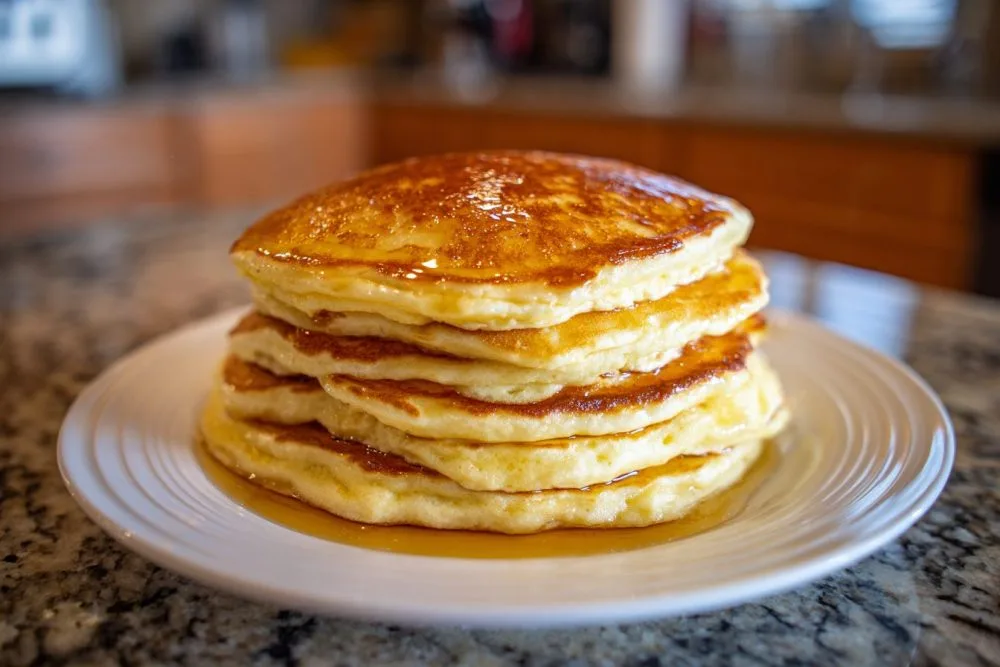
Ever wake up with that undeniable craving for something warm, sweet, and utterly comforting? For me, it’s almost always a stack of beautifully golden, fluffy homemade pancakes. There’s something so cheerfully satisfying about that first bite, especially when you’re making them from scratch.
Contents
- The Secret to Seriously Soft Pancakes
- Gather Your Golden Goodness: Ingredients for Easy Pancakes
- Let’s Get Flipping! Crafting Your Fluffy Pancakes
- Step 1: Whisk the Dry Elements
- Step 2: Combine the Wet Components
- Step 3: Unite Wet and Dry (Gently!)
- Step 4: Heat Your Surface
- Step 5: Cook ‘Em Up
- Step 6: Flip and Finish
- Frequently Asked Questions About Homemade Pancakes
- Why are my pancakes flat and not fluffy?
- Can I make pancake batter ahead of time?
- What’s the best way to keep pancakes warm?
- My pancakes are sticking to the griddle, what gives?
- Can I use regular milk instead of buttermilk?
- Pancake Pro-Tips and Serving Ideas
- Storing and Reheating Leftover Flapjacks
- Nutritional Snapshot

The Secret to Seriously Soft Pancakes
You might be thinking, “Pancakes are just flour, milk, and eggs, right?” And while you’re technically correct, there are a few little tricks to making them go from “good enough” to “oh my goodness, these are incredible!” It’s all about the balance and how you handle the batter. One key aspect is not overmixing. When you stir pancake batter too much, you develop the gluten in the flour, which leads to a tougher, chewier pancake. We want tender and light! Another crucial element is the leavening — baking powder and baking soda working in harmony to create those beautiful bubbles.Why This Recipe Delivers Peak Pancake Perfection
What sets this recipe apart? It’s a combination of tested ratios and a specific technique that ensures those picture-perfect, airy stacks every single time. We’re using buttermilk (or a quick DIY version) for extra tang and tenderness, along with a touch of melted butter right in the batter for richness. The result is a pancake that’s robust enough to hold up to your favorite toppings but still incredibly delicate on the inside. It’s the kind of breakfast that makes you want to linger at the table.Gather Your Golden Goodness: Ingredients for Easy Pancakes
Before we get our hands dirty (or buttery, rather), let’s make sure our pantry is stocked. You probably have most of these ingredients already!Wet Ingredients
- 1 large egg, at room temperature
- 1 cup buttermilk (or 1 cup milk + 1 tablespoon lemon juice or white vinegar, let sit for 5 minutes)
- 2 tablespoons unsalted butter, melted and slightly cooled, plus more for greasing the griddle
- 1 teaspoon vanilla extract (optional, but highly recommended for that cozy flavor)
Dry Ingredients
- 1 ½ cups all-purpose flour
- 2 tablespoons granulated sugar
- 1 tablespoon baking powder
- ½ teaspoon baking soda
- ¼ teaspoon salt
For Serving
- Butter
- Maple syrup
- Fresh berries, whipped cream, chocolate chips, or any of your favorite pancake toppings!

Let’s Get Flipping! Crafting Your Fluffy Pancakes
Making these is less about precision and more about gentle handling. Follow these steps, and you’ll be enjoying a stack of warm, golden pancakes in no time.Step 1: Whisk the Dry Elements
In a large mixing bowl, combine your flour, sugar, baking powder, baking soda, and salt. Give them a good whisk to ensure everything is evenly distributed. This prevents clumps of leavening agents in your finished pancakes.Step 2: Combine the Wet Components
In a separate, medium-sized bowl, lightly beat the egg. Then, whisk in the buttermilk, melted butter, and vanilla extract (if using). Make sure your melted butter isn’t too hot, or it could scramble the egg!Step 3: Unite Wet and Dry (Gently!)
Pour the wet ingredients into the dry ingredients. With a whisk or a spatula, mix just until combined. It’s okay if there are a few lumps – Tip: Undermixed batter results in tender pancakes, while overmixed batter leads to tough ones. Stop stirring as soon as you don’t see any more streaks of dry flour. Let the batter rest for 5-10 minutes while you heat your griddle. This rest time allows the gluten to relax and the leavening agents to start working their magic.Step 4: Heat Your Surface
Place a large non-stick griddle or a heavy-bottomed pan over medium heat. Once hot, lightly grease it with a pat of butter, wiping away any excess with a paper towel. You want a very thin, even layer of fat. A good test: sprinkle a few drops of water on the surface; if they sizzle and evaporate quickly, it’s ready.Step 5: Cook ‘Em Up
Pour about ¼ cup of batter for each pancake onto the hot griddle. Give them a little space so they don’t run into each other. Cook for 2-3 minutes per side, or until you see bubbles forming on the surface and the edges look set. The underside should be beautifully golden brown.
Step 6: Flip and Finish
Carefully slide a spatula under each pancake and flip it. Cook for another 1-2 minutes on the second side, until golden brown and cooked through. Transfer the cooked pancakes to a plate and keep them warm in a low oven (around 200°F / 95°C) while you cook the remaining batter.Frequently Asked Questions About Homemade Pancakes
Got a burning question about your pancake quest? I’ve got answers!Why are my pancakes flat and not fluffy?
Flat pancakes are usually a sign of old or inactive leavening agents (baking powder/soda) or overmixing the batter. Always check expiration dates on your baking powder and soda, and remember the “just combined” rule for mixing.Can I make pancake batter ahead of time?
While you can mix the dry ingredients ahead, I don’t recommend mixing the wet and dry ingredients too far in advance. The baking soda and baking powder start reacting once they hit liquid, and their leavening power will diminish over time. For best results, mix the wet and dry ingredients just before cooking.What’s the best way to keep pancakes warm?
Preheat your oven to its lowest setting (around 200°F or 95°C). As you cook pancakes, transfer them to a wire rack set on a baking sheet in the warm oven. This keeps them toasty without making them soggy.My pancakes are sticking to the griddle, what gives?
This often means your griddle isn’t hot enough, or it needs more fat. Make sure your griddle is properly preheated and lightly greased between batches. A good non-stick pan also makes a huge difference.Can I use regular milk instead of buttermilk?
You absolutely can! If you don’t have buttermilk, you can easily make a substitute. For every cup of milk, add 1 tablespoon of lemon juice or white vinegar, stir it, and let it sit for 5 minutes. It will curdle slightly and mimic buttermilk’s acidity, which is crucial for activating the baking soda.Pancake Pro-Tips and Serving Ideas
Once you’ve mastered the basic fluffy pancake, the world of variations opens up! You can fold in chocolate chips, blueberries, sliced bananas, or even a sprinkle of cinnamon and nutmeg into the batter before cooking. For serving, a simple pat of butter and a generous drizzle of real maple syrup are classic for a reason. But don’t stop there! Consider a dollop of whipped cream, a scattering of fresh berries, a spoonful of fruit compote, or even a sprinkle of toasted nuts for added texture. These are perfect for a lazy Sunday brunch or a quick, comforting weekday treat. And honestly, they’re so good, sometimes I just eat them plain!Storing and Reheating Leftover Flapjacks
If by some miracle you have any leftover pancakes (it happens, especially if you double the recipe!), they store beautifully. Let them cool completely to room temperature, then stack them with parchment paper in between each pancake to prevent sticking. Store them in an airtight container or a freezer-safe bag. In the fridge, they’ll keep for 3-4 days. For longer storage, freeze them for up to 2-3 months. To reheat, you can pop them in the toaster for a few minutes until warmed through and slightly crispy, microwave them briefly, or even warm them in a dry skillet over medium-low heat. They’ll be almost as good as fresh!Nutritional Snapshot
Here’s a general idea of what a serving of these delightful pancakes brings to the table. Please remember that these values are estimates and can vary based on exact ingredients and portion sizes. Additions like syrup and butter will, of course, increase these numbers.| Nutrient | Amount Per Serving (approx.) |
|---|---|
| Calories | 280 kcal |
| Protein | 8g |
| Fat | 10g |
| Saturated Fat | 6g |
| Carbohydrates | 40g |
| Fiber | 2g |
| Sugar | 10g |
| Sodium | 350mg |
| Cholesterol | 60mg |

Classic Fluffy Buttermilk Pancakes
Whip up the best fluffy homemade pancakes with this easy recipe, perfect for a delightful breakfast or brunch.
📝 Ingredients
👩🍳 Instructions
-
1In a large bowl, whisk together the flour, sugar, baking powder, baking soda, and salt until well combined.
-
2In a separate medium bowl, lightly beat the egg. Whisk in the buttermilk, cooled melted butter, and vanilla extract (if using).
-
3Pour the wet ingredients into the dry ingredients. Mix gently with a whisk or spatula until just combined. A few lumps are okay; do not overmix. Let the batter rest for 5-10 minutes.
-
4Heat a non-stick griddle or heavy-bottomed pan over medium heat. Lightly grease with butter, wiping away any excess.
-
5Pour about ¼ cup of batter per pancake onto the hot griddle. Cook for 2-3 minutes per side, until bubbles form on the surface and edges are set, and the underside is golden brown.
-
6Flip pancakes and cook for another 1-2 minutes, or until golden brown and cooked through. Transfer to a warm oven (200°F / 95°C) to keep warm while cooking remaining batter.
-
7Serve immediately with your favorite toppings like butter and maple syrup.
💡 Notes
For best fluffiness, ensure your baking powder and soda are fresh. If you don't have buttermilk, make your own by adding 1 tablespoon of lemon juice or white vinegar to 1 cup of regular milk and letting it sit for 5 minutes before using. Do not overmix the batter; lumps are fine!
🥗 Nutrition (per serving)
Calories
280 kcal
Protein
8g
Total Fat
10g
Saturated Fat
6g
Carbs
40g
Fiber
2g
Sugar
10g
Sodium
350mg
Cholesterol
60mg
Rate This Recipe
☆
☆
☆
☆
☆